10. Plaid Flannel Rag Wreath with Brass Bell Accents
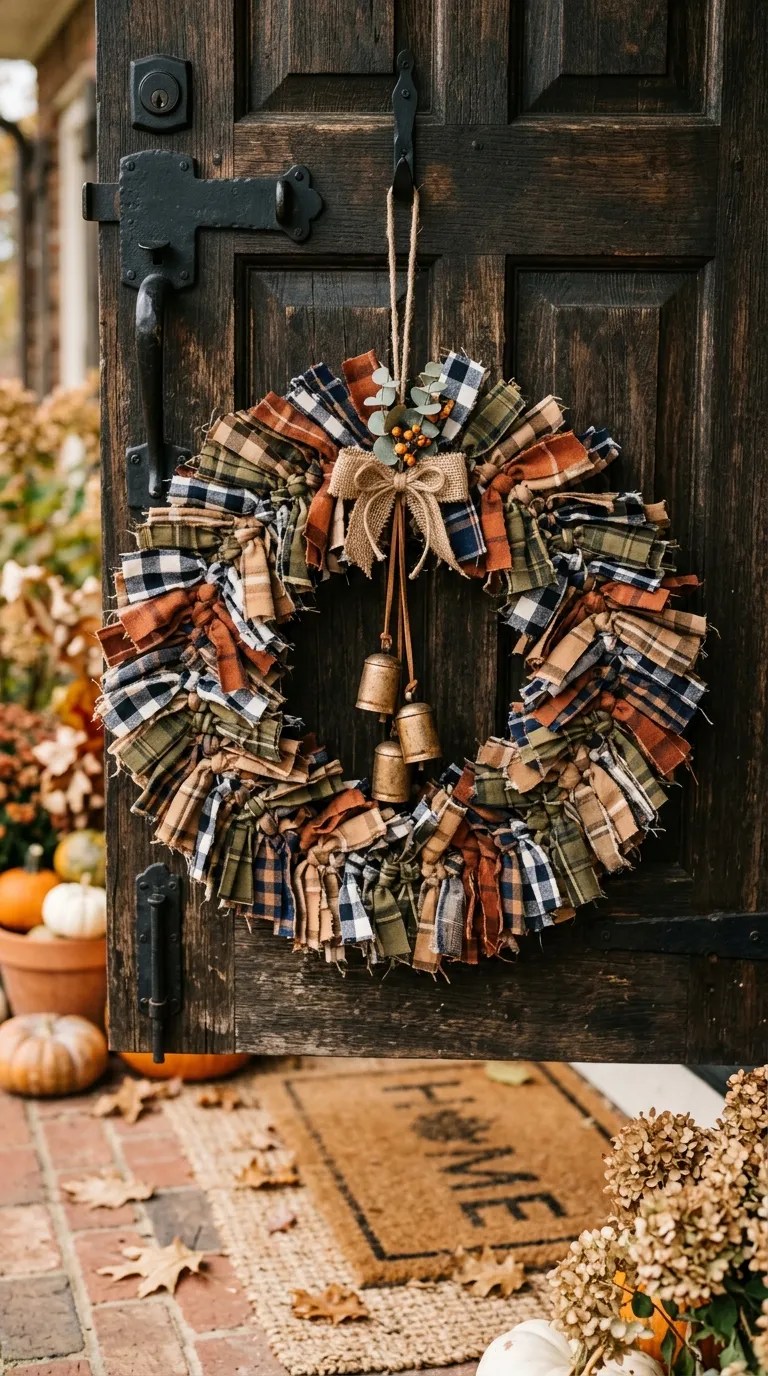
Flannel felt soft and slightly napped, warm in a way that made my hands keep folding it, plaids richer once cut into strips and jumbled. I had a 14 to 16 inch multi-wire frame, a rotary cutter or fabric shears, about 2 yards of cotton flannel in autumn patterns, red-black buffalo check, hunter green tartan, and warm camel plaid, plus vintage-style brass cowbells on a leather cord. I cut strips about 1 inch by 7 inches, about 200 to 250 strips in all, stacked by pattern to alternate while knotting. Even strips matter, since uneven ones make a rag wreath look ragged in the wrong way.
I folded each strip in half, tied a single overhand knot around a rail, and slid the knot tight against the divider, alternating patterns around the frame. I pushed knots close together so the frame disappeared and the wreath grew thick. Then I fluffed frayed ends outward with my fingers, pulling layers apart gently so plaids showed and the wreath looked soft rather than matted. I hung a trio of brass bells from the top center rail on the leather cord, letting them hang in the open heart, where they moved when the door opened. Flannel can be washed and refreshed, so the wreath can be shaken out, re-fluffed, and hung again. Flannel showed me repetition is the craft, one knot at a time.
What supplies do I need to begin making DIY fall wreaths?
I start with a base, an 18-inch grapevine, wire, or foam form, a high-temp glue gun with sticks, floral snips, and 22-gauge floral paddle wire, then add preserved greenery, dried florals, burlap, or velvet, plus mini pumpkins or pinecones for accent. I keep tools within reach before opening the first bundle, since hunting for snips with glue on my fingers wastes time. A sturdy base and a reliable fastening matter more than a large stash of decorations.
How can I make my handmade fall wreath last through bad weather?
For outdoor use I choose grapevine, faux foam, burlap, flannel, and wired artificial elements, which hold shape when weather shifts, and I avoid untreated paper, book pages, and delicate dried flowers outside, since rain and damp soften and spoil them. I finish outdoor wreaths with clear exterior-grade matte UV protectant spray in light coats, which helps color hold and resists moisture. I still hang delicate wreaths in sheltered spots, out of driving rain and harsh sun.
What is the easiest base to work with for a seasonal wreath project?
Grapevine is easiest, because crevices and friction in twisted twigs grip stems and wire with very little glue, and the base looks attractive even where it shows through uncovered. I wedge stems directly into twigs, wire clusters on without thick glue, and leave part of the ring bare as a design choice without it looking unfinished. Wire frames need more wrapping to disappear, and foam forms need full coverage, so grapevine saves time and forgives spacing.
How do I store handmade fall wreaths so they can be reused next year?
I store wreaths in clear rigid wreath containers when I have them, or hang a wreath on a garment rack covered with a heavy plastic dry-cleaning bag, keeping shape supported and dust off. I keep stored wreaths in a climate-controlled space and avoid hot attics and damp basements, because attic heat can melt glue and basement damp can bring mildew to dried flowers and fabric. I tighten loose wire before storing and label the container to find it next fall.
Can I make an attractive fall wreath on a tight budget?
Yes. I keep many wreaths under $15 by foraging pinecones, sweetgum balls, acorns, and branches, and pairing them with book pages, scrap flannel, and a low-cost grapevine form. Foraged material needs cleaning and drying before gluing, and scrap fabric needs even cutting, but neither costs money, only time. A wreath built from gathered material and craft-bin scraps looks seasonal, not cheap, because the materials carry fall color and texture.
The material stays with me after the last wreath is hung, in eucalyptus leaves that still smell faintly green, wheat awns caught in my sleeve, and flannel strips left on the table. I made these wreaths by starting with what felt right in my palm and letting shape follow, and that habit stays with me into every season where I reach for a bundle first and a plan second.