I start every porch job at the curb, with my back to the house, because that is exactly where a visitor stands before deciding what kind of home this is, and a buyer makes that same judgment even faster, from a car window, before a foot touches the walkway. From out there, I cannot see the clever storage inside or the fresh paint in the hallway, and I do not care yet about square footage or closet space, because all I have is the entry, the door, the light, the plants, and the feeling that somebody who lives here pays attention. So I judge each change the way that stranger would, asking whether it reads clearly from the street, whether it looks cared for rather than patched up, and whether the path to the door feels welcoming enough to follow. That curb view kept my budget honest, too, since a porch that photographs well from twenty feet away does not need expensive furniture, only clean lines, a strong door color, readable numbers, and details that hold up when somebody walks closer and looks again.
1. Fresh Paint on the Front Door
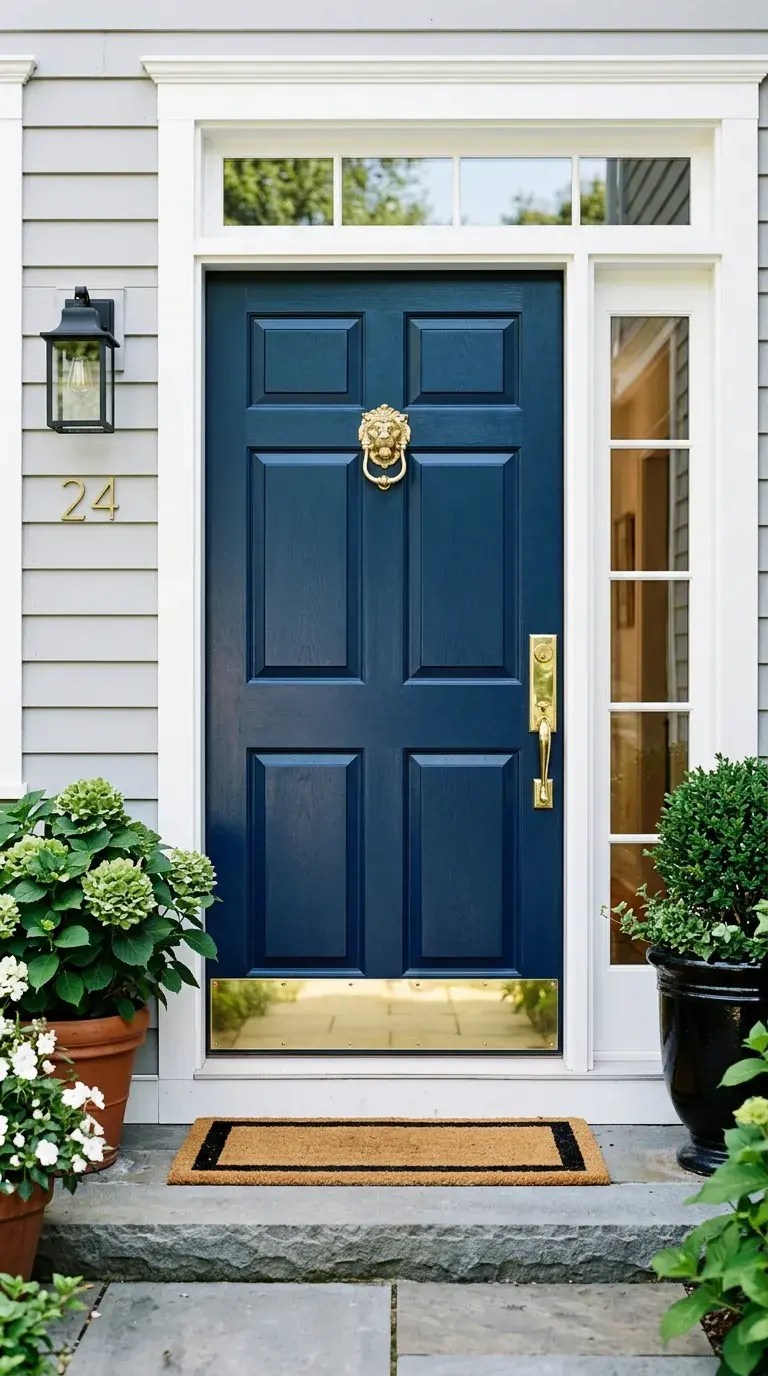
A visitor reads the front door first, long before noticing anything else, so I treat the door as the headline of the whole showing, and I start by removing the handle, the knocker, and the deadbolt, laying the hardware on a towel inside so nothing gets lost and the paint can reach every edge without pooling around a plate. I clean the door thoroughly and sand it lightly, just enough to give the new finish something to grip, and I apply exterior primer, which matters most when I am changing dark to light or light to dark, because without that primer the old color keeps showing through in patches and the door looks tired from the curb no matter how fresh the topcoat feels up close. I brush on two even coats of semi-gloss or satin exterior paint, allowing drying time between coats instead of rushing the second one over a tacky first, and I keep the coats thin and steady so the finish reads smooth from the sidewalk and from the top step alike. I chose navy for our door, and I kept charcoal gray, black, red, and yellow on the short list while I held swatches against the siding, the brick, and the trim, because a door color has to complement the house around it rather than fight it, and a color that looks bold in the store can look harsh against warm brick or lost against dark siding. When the hardware goes back on and the door closes with that clean, finished click, the entry suddenly looks intentional, and a stranger arriving for the first time gets the message before anybody says a word, that this house is looked after, and the inside is worth walking into.