
The backyard did not change in one heroic weekend. It changed one Saturday at a time, with borrowed tools, neighbors drifting over with coffee and opinions, rain testing everything I had just finished, and me learning what held up before the next weekend started.
1. Build a Rustic Pallet Herb Garden
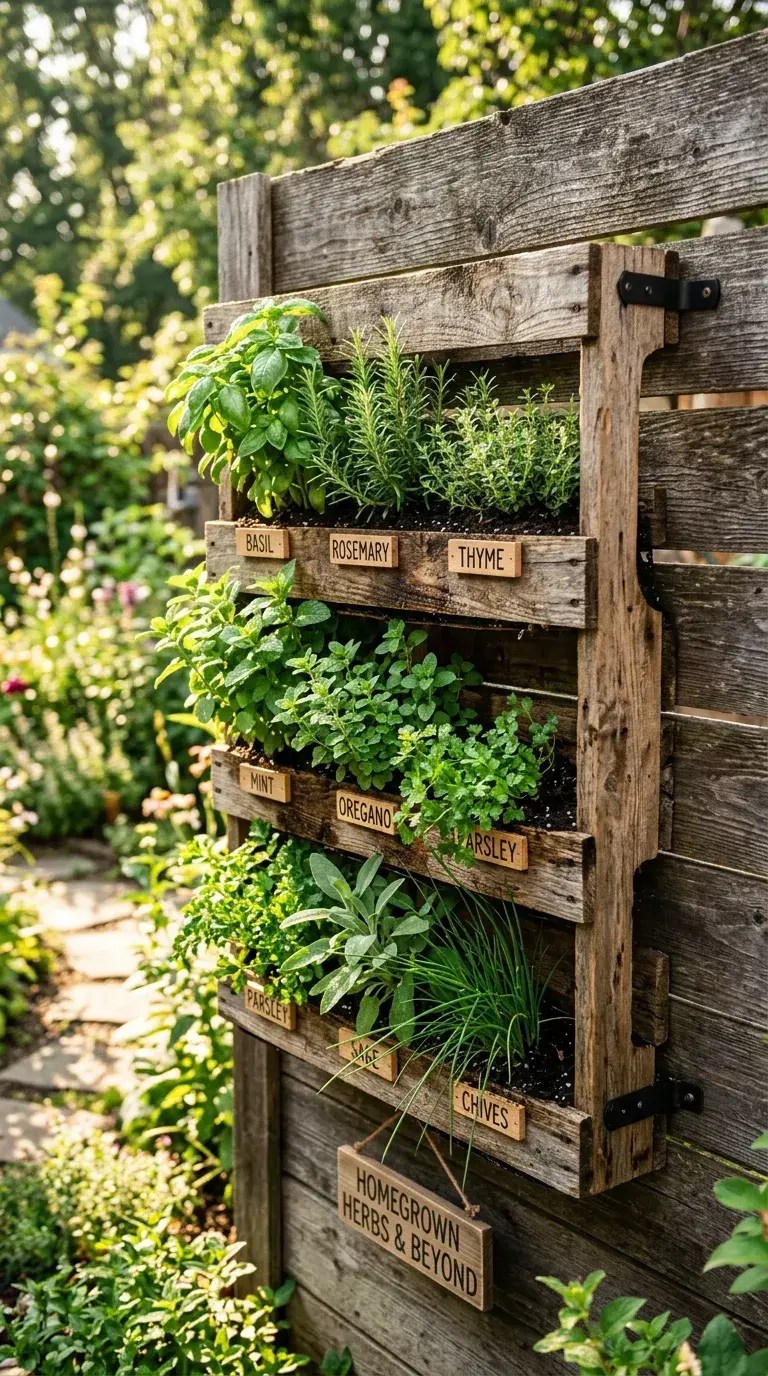
The first weekend started with a pallet I had hauled home and a neighbor leaning on the fence asking what I planned to do with it, which is how most of this camp started. Before I cut or sanded anything, I inspected the pallet closely for protruding nails, splinters, and chemical treatment stamps, because a pallet that carried chemicals has no business holding herbs I plan to eat, and I set aside any board that looked treated or stamped in a way I did not trust. I sanded the whole pallet smooth, working with the grain until my hands stopped catching on rough spots, and I brushed on a weather-resistant exterior sealant, letting it dry fully before I went any further, since sealant over damp wood peels by midsummer. I stapled landscape fabric to the back and the bottom of the slats with heavy-duty staples, pulling the fabric taut so it formed planting pockets that would hold soil without sagging, and I double-stapled the corners, because soil is heavy when it is wet and a single staple pulls out under that weight.
I filled the pockets with rich, well-draining potting mix blended with organic compost, and I planted basil, rosemary, thyme, mint, and cilantro, keeping the mint in its own pocket where its roots could not crowd the thyme. Such a pallet can lean against a fence or mount securely to a sunny exterior wall. I mounted mine, checking the fixings twice, because a soil-filled pallet is far heavier than an empty one. I watered it regularly and fed it with occasional organic fertilizer. After the first rain I checked every staple and pocket. Nothing gave way. The herbs rooted fast, and the pallet became the place I reached for seasoning while dinner was cooking.