2. Hand-Painted Ceramic Vases
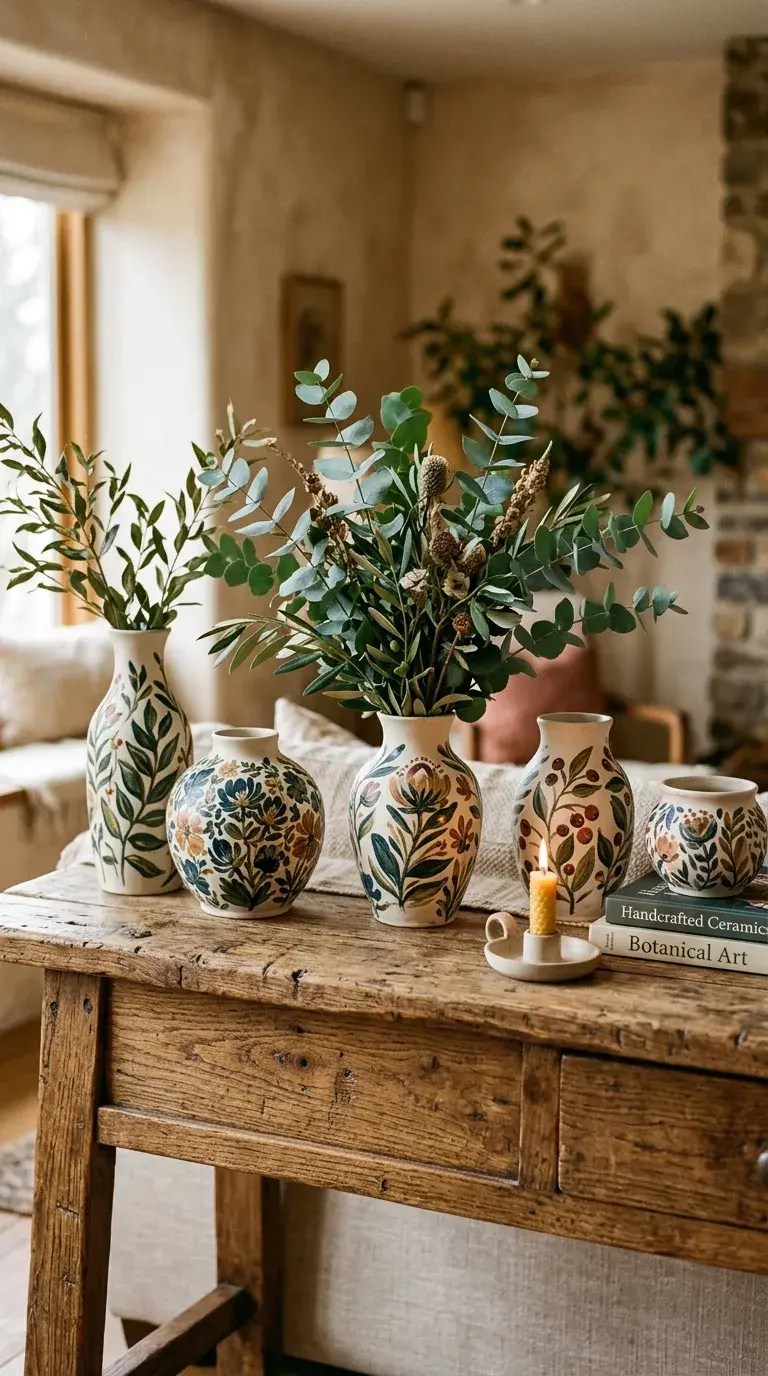
The vases live in the bin between seasons, wrapped in old towels, and I pull out a different shape each time, because shape matters more than color when a vase is going to be repainted anyway. I hunt for thrifted or plain ceramic vases, jugs, and jars, choosing for shape and texture over color, since paint will cover color but nothing fixes a dull silhouette. I clean each piece well, and then I work with primer or acrylic paint mixed with baking soda, which gives a textured matte finish that reads like earthenware, rough to the touch and soft to the eye, and I have learned to mix the baking soda in a little at a time, because too much at once clumps and leaves lumps that no brush will smooth. With fine-detail brushes I paint seasonal motifs right onto the surface, spring cherry blossoms in loose clusters, summer wildflowers with tall stems, autumn brushstrokes in warm bands, winter evergreen sprigs in deep green, and each motif is simple enough that a shaky hand still looks handmade rather than wrong.
When the paint is dry, the vase goes back on display and gets filled with seasonal stems, dried pampas grass, or fresh clippings from outside, and the stems do as much work as the paint, since a winter vase holding a summer stem looks confused. At the end of the season the stems go out, the vase goes back into the bin, and the next vase comes out to be painted for what is coming. I keep the brushes and the small jars of paint in a bag inside the bin, so the swap does not turn into a hunt through drawers, and I accept that paint chips at the rim over time, which I touch up rather than starting over.