I started by counting backward from the wedding date on a plain sheet of paper, because I knew the decor would never get finished if I left it to the last frantic week, and I wanted every craft night to end with something I could stack, label, and set aside without worrying about it again. I wrote the big jobs first, the ones that needed drying time or a lot of hands, and I worked back through the smaller jobs that could be done late in the game, and once that order was clear I stopped trying to do everything myself. I asked the wedding party to show up for craft nights with old clothes on and phones put away, and I handed each person a job that matched what they were already good at, so nobody stood around waiting for instructions while glue dried. One friend who loves a tidy table took charge of counting and sorting, another who paints signs for fun took the lettering, and the rest of us filled in wherever the pile was tallest that night, and the whole plan felt calmer once the work had names and owners attached to it.
The kitchen table became our workshop, covered in drop cloths and ringed with coffee mugs, and I kept a running list taped to the fridge so anyone who walked in could see what was done, what was drying, and what still needed hands. We did not try to finish a whole idea in one sitting. We jarred and wrapped one night, painted and sanded another, tied and tagged on a third, and I checked each finished batch against the table plan before I boxed it up, because a centerpiece that looks sweet on its own can still crowd a table when there are ten of them in a row. What follows is the order we worked in, job by job, with the helper who owned each one and the small choices that kept the cost down without making the room look cheap. Every piece here was made by hand, carried home in boxes, and set out by the same people who had laughed through the making of it, and that showed in the room on the day.
1. Mason Jar Centerpieces with Wildflowers
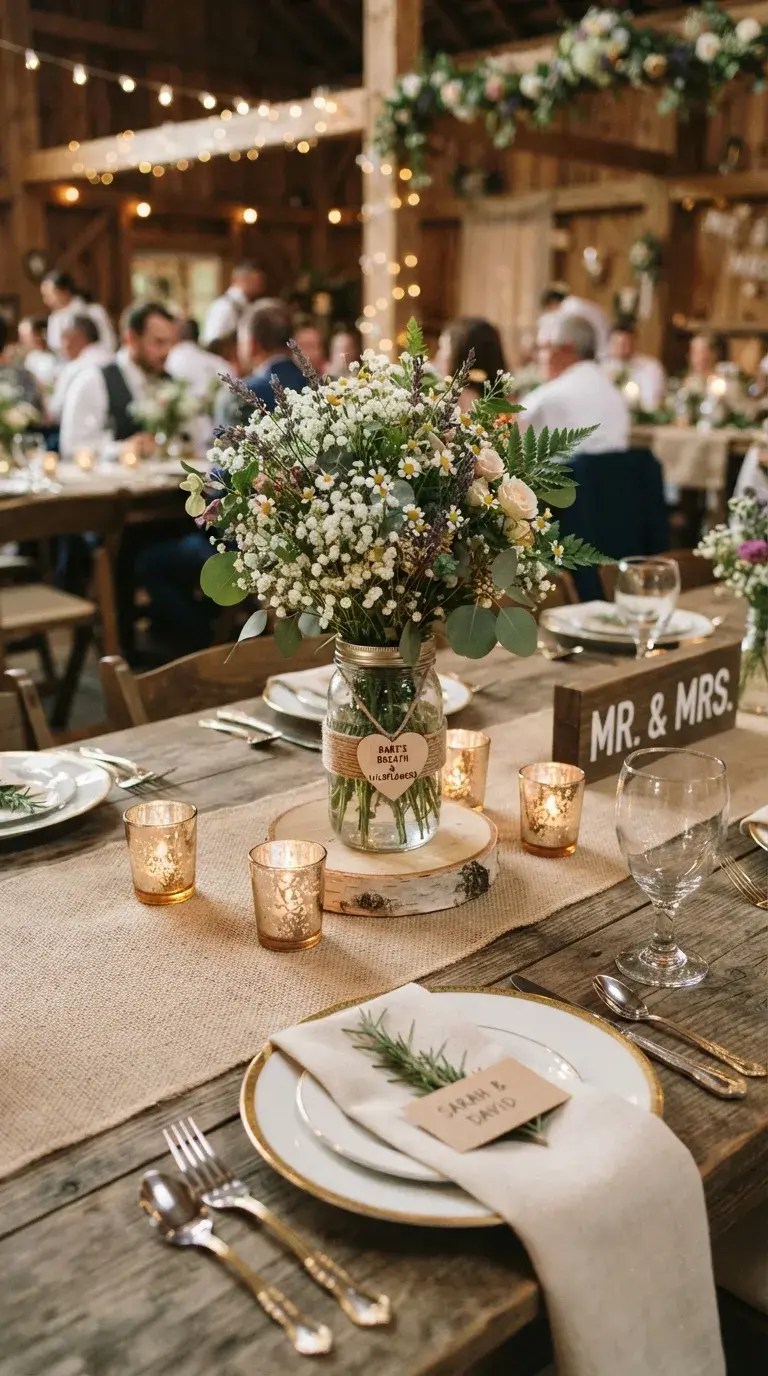
The jar job belonged to the collectors in our group, the friends who never throw a good jar away, and they had been saving for months before I even asked, pulling jars from friends and family and picking up more at thrift stores whenever they spotted a clean shape with no chips along the rim. I gave them a simple rule: keep the sizes close enough to look planned, but do not worry if every jar is not identical, because a little variation reads as collected rather than mismatched once flowers go in. On craft night they washed and dried the whole haul, then wrapped some jars with twine, some with lace, and some with burlap, tying each wrap tight and trimming the ends so nothing frayed into the table linen, while another helper painted the interiors of the remaining jars with pastel or metallic acrylic, turning each one slowly so the paint coated the inside evenly and left no bare patches near the base. I filled the finished jars with local wildflowers, baby’s breath, or greenery, mixing tall stems with soft filler so each jar looked full without needing a florist’s budget, and I set three jars to a table in my mind as we worked, checking that the heights and wraps did not all match too neatly. The jars carried the whole centerpiece plan, and because the collecting had been spread over months, the cost stayed low and the look stayed personal, like the room had been gathered rather than ordered.