I started with the weather, not the shopping list, because almost everything on this porch needed paint, stain, or sealant to dry outside, and a damp afternoon would have pushed the whole weekend sideways. I checked for two dry days in a row, wrote one list in buying order rather than building order, and drove to the home improvement store first, while patience and daylight were both still good. Paint, primer, stain, and sealant went in the cart before anything pretty did, because those cans decided the schedule, and I wanted the slow-drying jobs started before lunch. After that I stopped for crates, plants, and fabric, in that order, so the fabric stayed clean and the plants did not bake in the car. That order sounds fussy until you have carried a wet stencil, a thorny shrub, and a bolt of fabric across a parking lot at once.
Once I was home, I worked by drying time instead of by how excited I was about each project, which meant the door, the sign, and the welcome mat went first, even though the pillows and the lanterns were the ones I wanted to photograph. While a coat dried, I knotted cord or wired jars or sewed a seam, and by the time I circled back, the paint was ready for its next coat instead of still tacky under my thumb. A few jobs taught me to slow down where I had rushed a prep step, and a few taught me the cheapest version was also the sturdiest, if I let it cure. None needed a contractor or a big budget, only a weekend, a dry forecast, and a willingness to let paint dry while I did something else.
1. Hand-Painted Welcome Mats
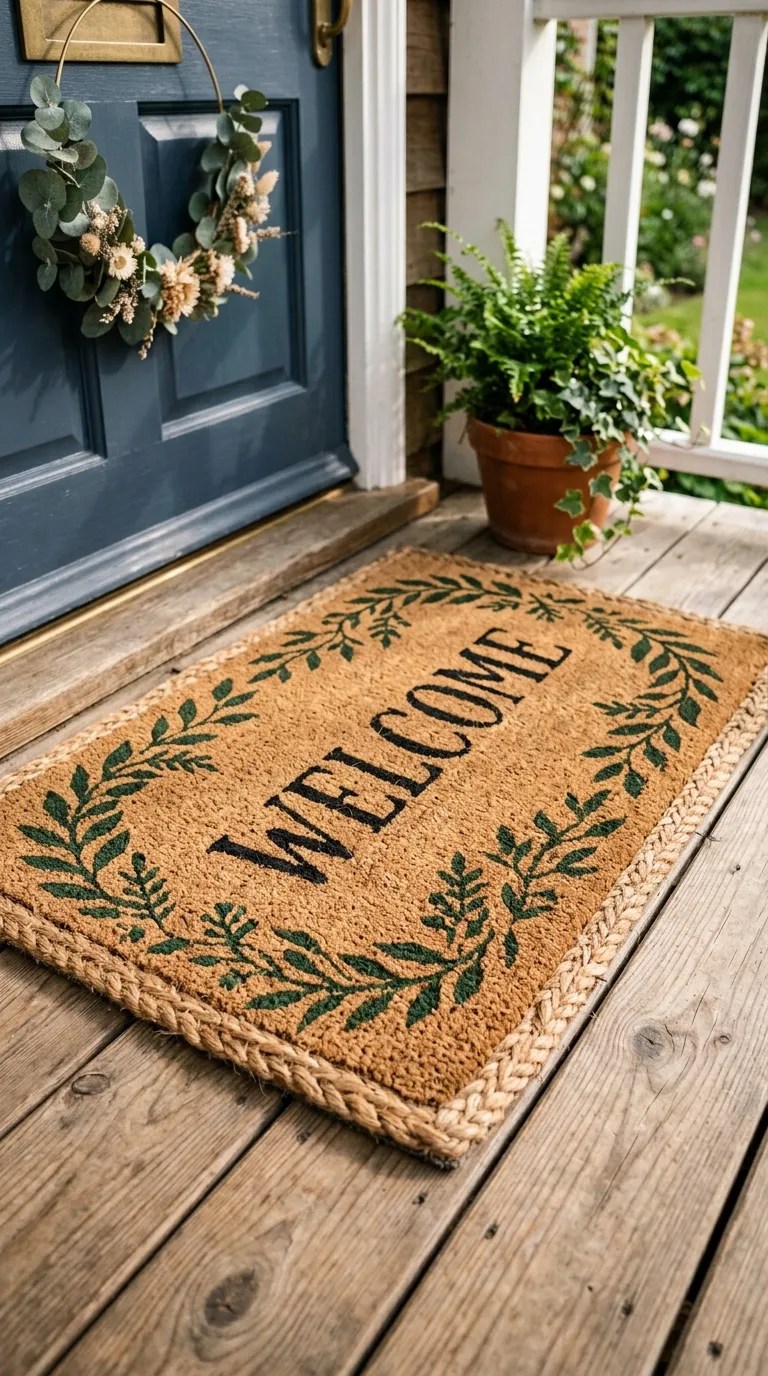
The mat was first on my drying schedule because it had to take foot traffic, rain, and sun, and I did not want to seal it the same afternoon I painted it. I bought a plain, inexpensive coir mat at the home improvement store, along with acrylic outdoor paint and a clear, UV-resistant outdoor sealant, and I made the stencil at the kitchen table from heavy cardstock, with painter’s tape holding the edges down. I taped the design firmly to the mat so the paint could not creep underneath, because my first attempt, years ago, had a blurred edge that looked like the letters had smudged in the rain before it ever rained. A monogram, a quirky greeting, or a seasonal geometric pattern all work, and I picked a greeting I would still like in November.
I used a stiff-bristled stencil brush on one section and a foam sponge on another, dabbing the outdoor acrylic paint straight down instead of brushing side to side, which kept paint on the coir surface instead of pushing it into the fibers in streaks. Once the paint was completely dry, I brushed on the coat of clear sealant, and then I left the mat flat in the garage overnight, out of the way of shoes and dogs, so the sealant could cure instead of picking up grit. That waiting step is the whole trick with a doormat: a mat sealed too soon feels sticky and collects every leaf, while a mat given a full dry looks store-bought and holds up to foot traffic and weather without the design wearing off in patches.