5. Rustic Cedar Hopper Station
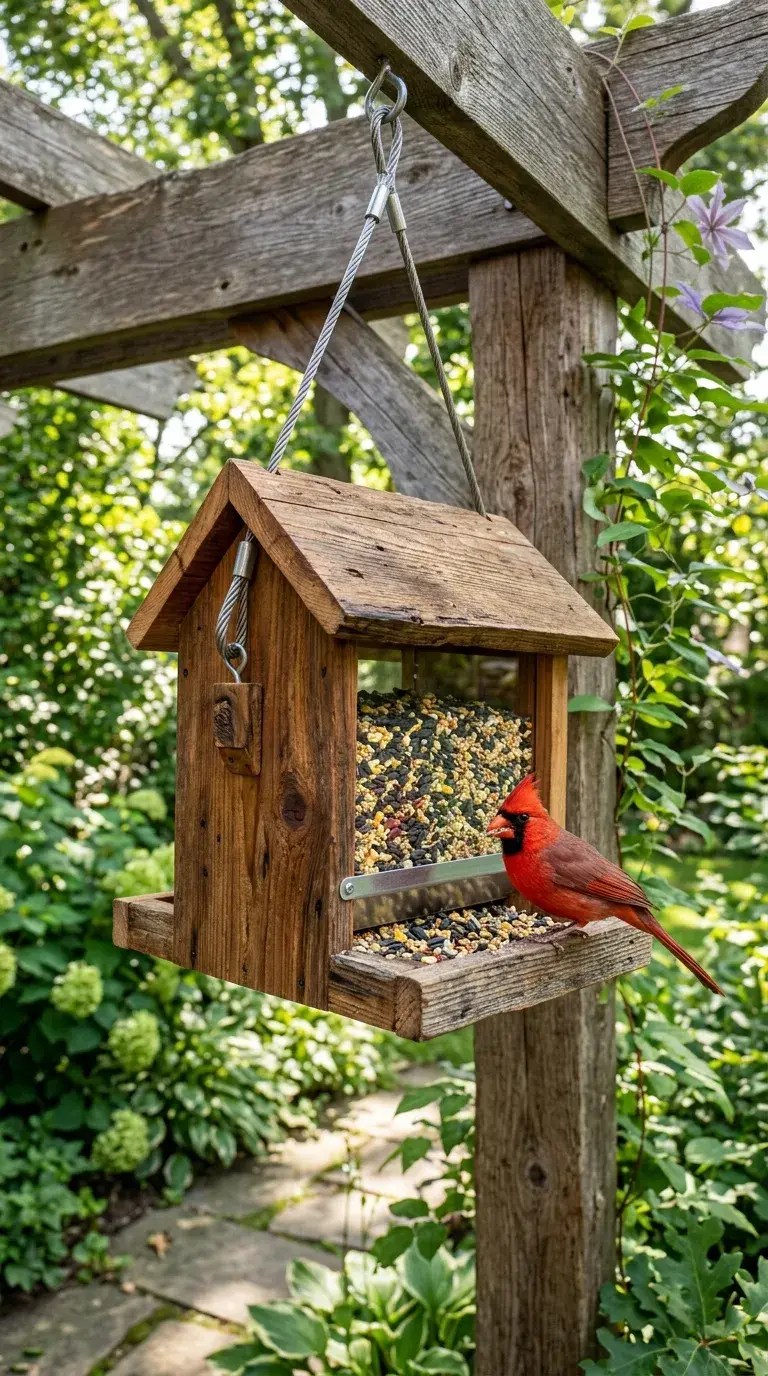
The cedar hopper sits under the oak like a small house, and my spring notes for it are the longest in the journal, because cardinals came to it in pairs, the male bright and watchful, the female quieter, and grosbeaks and nuthatches followed, each using the tray in a different way, the nuthatch hanging upside down as if the rules of perching did not apply to it. Cedar resists rot and insects, which is why I chose it for a feeder that would stay out through rain and snow, and the house shape, with its peaked roof, sheds water instead of letting it pool over the seed, a detail I noticed only after a heavy rain left the tray dry underneath. Clear acrylic panels on the sides show the seed level without my opening anything, and I check them from the window with my coffee, refilling before the hopper runs empty on a cold morning, because an empty feeder in winter sends birds elsewhere and they do not always come back the same day. Seed drops by gravity into the tray below, so the tray stays supplied as birds eat, and galvanized cables hold the station level and steady, even when a larger bird lands hard on one side. Over two years the cedar has aged to a silvery-gray tone that matches the fence and the oak bark, and I like that it no longer looks new, it looks like part of the yard, weathered in the same way the trees are.