10. Harvest-Inspired Pumpkin and Corn Husk Basket
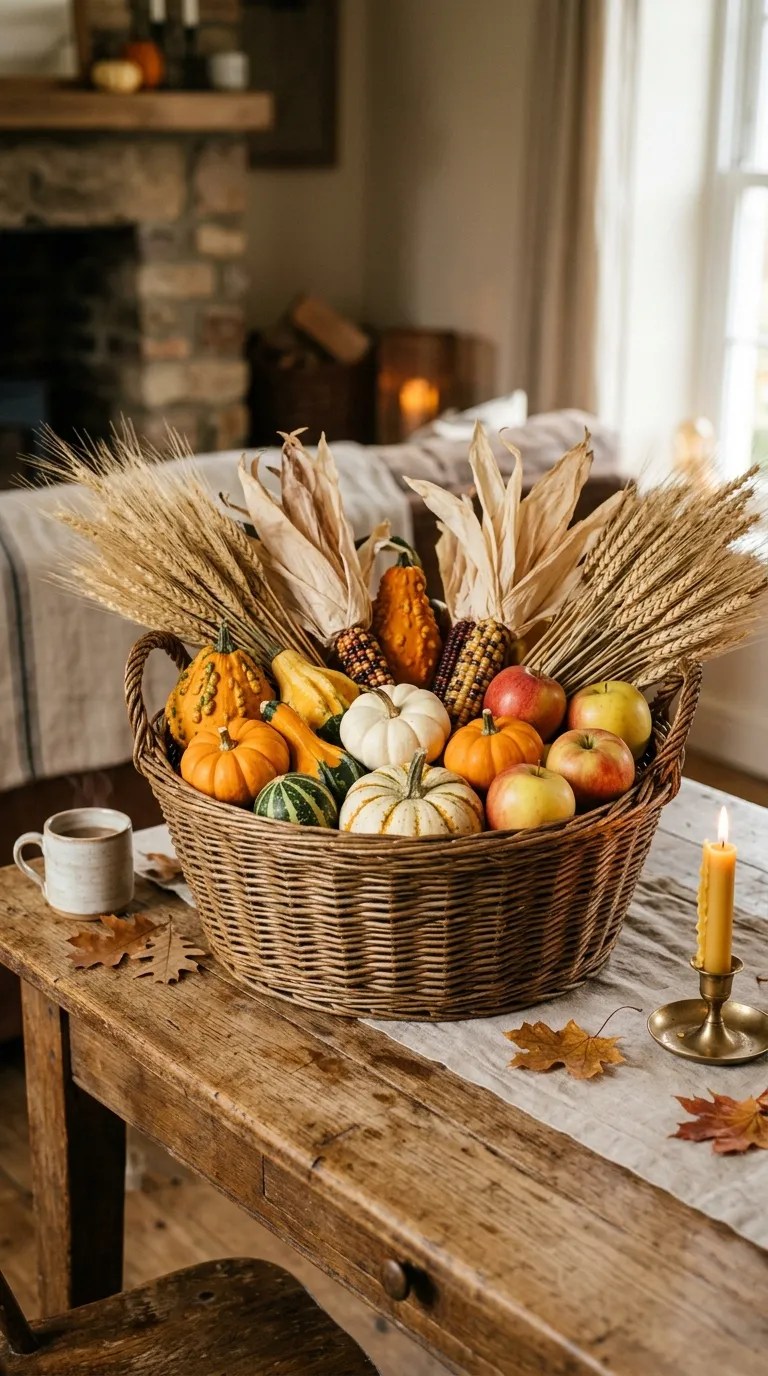
The basket idea is the crate itself, brought to the table. I start with a large, shallow basket, a vintage wooden or woven one if I have it, and I fill it the way I would fill a harvest crate, small pumpkins and gourds first, then dried corn husks layered between them, then a few apples, pears, or a small bundle of wheat stalks for extra texture. Dried lavender or sage tucks in last, just enough for a subtle, earthy fragrance when someone leans over the table. The layers matter more than any single piece, and I build up from the bottom so the basket looks full from every angle, not just from the front.
Materials: Large shallow basket, small pumpkins, gourds, dried corn husks, apples or pears (optional), dried lavender or sage.
Time: 20 minutes | Difficulty: Beginner
This one is as cozy as it is inviting, and it suits a casual fall brunch or a Thanksgiving table where the food is the main event. No basket on hand means a wooden crate or a large shallow bowl works as the base, with the same layering. I keep adding until the arrangement feels abundant, and then I stop.
How do I keep my pumpkin centerpiece fresh for longer?
If I am using real pumpkins, I avoid carving or cutting them, because an uncut pumpkin lasts far longer. I keep them in a cool, dry place when they are not on the table, and I mist them lightly with water so the skin does not dry out. For a hollowed pumpkin used as a vase, I line the inside with a plastic bag or a small jar to hold the water and keep the flesh from going soggy. Faux pumpkins last longest of all, and I pack them away to reuse year after year.
Can I mix real and faux pumpkins in a centerpiece?
Yes, and I do it often. Mixing real and faux pumpkins adds texture and variety that one kind alone does not give. I put faux pumpkins where they will not be handled, like the center of the table, and I use real pumpkins for accents or for pieces that might need to be moved. That mix also lets me use a variety I cannot find easily in real form, without worrying about how long it will keep.
What are some budget-friendly ways to decorate pumpkins?
I do not need to spend much to make a pumpkin centerpiece look considered. Paint I already have gives a pumpkin a fresh look, and twine, fabric scraps, or ribbon add texture for nothing. Pinecones, leaves, and acorns gathered from the yard fill gaps better than anything I could buy, and a simple group of unpainted pumpkins in different sizes makes a strong statement on its own. The crate, not the craft store, is where most of these ideas start.
How do I choose the right pumpkin for a centerpiece?
It depends on the job the pumpkin has to do. For painting or glitter, I choose smooth, even pumpkins, like white or sugar pumpkins, because the finish stays clean. For a rustic look, I choose bumpy or irregular gourds, because the shape is the decoration. For stacking, I choose pumpkins with flat tops and bottoms so the tower stands steady. Mini pumpkins cluster well, and a large pumpkin makes a bold statement as a single focal point. I sort first, then I decide.
Can I use my pumpkin centerpiece outdoors?
Yes, with a few precautions. With real pumpkins, I keep the arrangement in a covered area, like a porch, so rain and extreme temperatures do not make the pumpkins rot faster. Faux pumpkins are the most durable choice outdoors. I secure light pieces, like leaves and pinecones, with a bit of hot glue so the wind does not scatter them across the yard before dinner.
How do I incorporate candles safely into a pumpkin centerpiece?
Safety comes first when candles sit near pumpkins. I always use flameless LED candles when the pumpkins are real or when the arrangement sits near flammable materials like dried leaves or paper. If I use real candles, they go in sturdy, non-flammable holders, kept well away from anything that could catch fire. I never leave burning candles unattended, and I extinguish them before leaving the room.
What are some non-traditional colors for pumpkin centerpieces?
Orange and white are the classics, and I still love them, but I do not stay inside them. Deep blues, emerald greens, matte black, and even pastel pinks make a striking, modern table. Metallic gold, silver, or rose gold add glamour, and earthy terracotta or sage green blend with natural elements. The test I use is simple: the color has to sit well with the decor already in the room and feel like mine, not like a trend I borrowed for a night.
When the crate is empty and the table is set, I stand back in the doorway the way I did at the start. The pumpkins I sorted by weight and skin are doing different jobs now, one holding flowers, one holding a message, one catching the light in gold. Together they tell the season the way a full crate does, honestly and without fuss.