10. Embrace Foldable and Collapsible Furniture
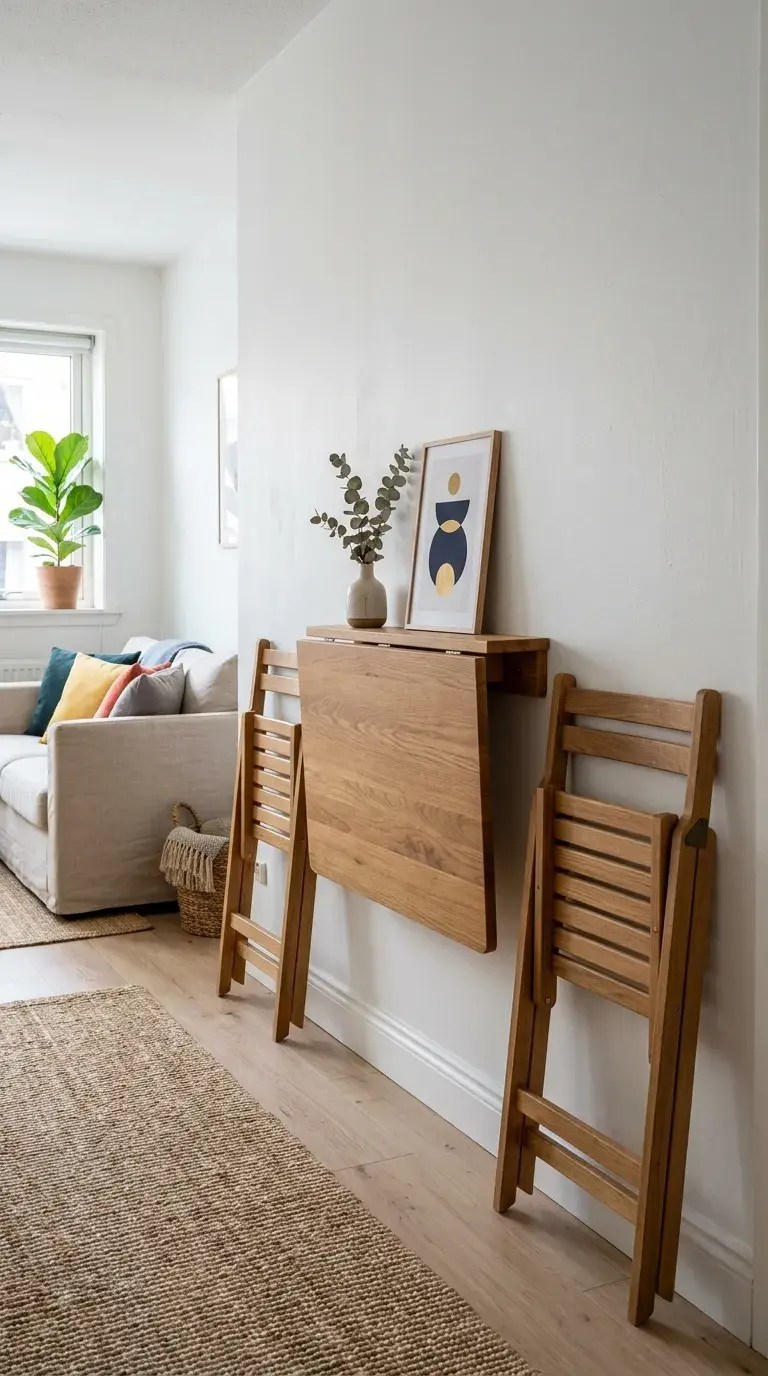
The final unpacking lesson was that my needs in the apartment change by the time of day, and furniture that only does one job at one size was fighting that rhythm, so I let the pieces that fold and collapse do the adapting instead of asking the rooms to stretch. My drop-leaf table is the clearest example, since it opens up for dinner when friends come over and folds down to a slim console against the wall when I need the floor back for anything else, and the folding chairs that go with it tuck into the closet or hang on pegs out of the way when the meal is over. The same thinking covered the smaller jobs too, with a collapsible hamper that flattens when the laundry is done, a folding step stool that disappears into the gap beside the fridge, and a roll-up drying rack that vanishes once the dishes are dry, and none of them demand a permanent corner the way a fixed version would. I liked that the space could expand and contract on demand, opening for a dinner or a laundry day and closing again afterward, because an apartment that can change shape during the day feels larger than its square footage suggests, and I never have to choose between having guests over and having room to move.
When the last box was flattened and the tape and packing paper were finally out the door, I walked through the apartment room by room and found that everything I had unpacked was already where I would look for it, from the shelves above the sofa to the bins under the bed and the tray by the front door. That walk-through was the real test, because a place can look tidy for a photograph and still be impossible to live in, but this one worked in the order I move through it, and the clutter had nowhere left to collect. I still adjust a shelf or swap a bin now and then, but the bones of the move-in held, and the apartment finally felt like a home I had settled into on purpose instead of a set of rooms I was camping in among boxes.