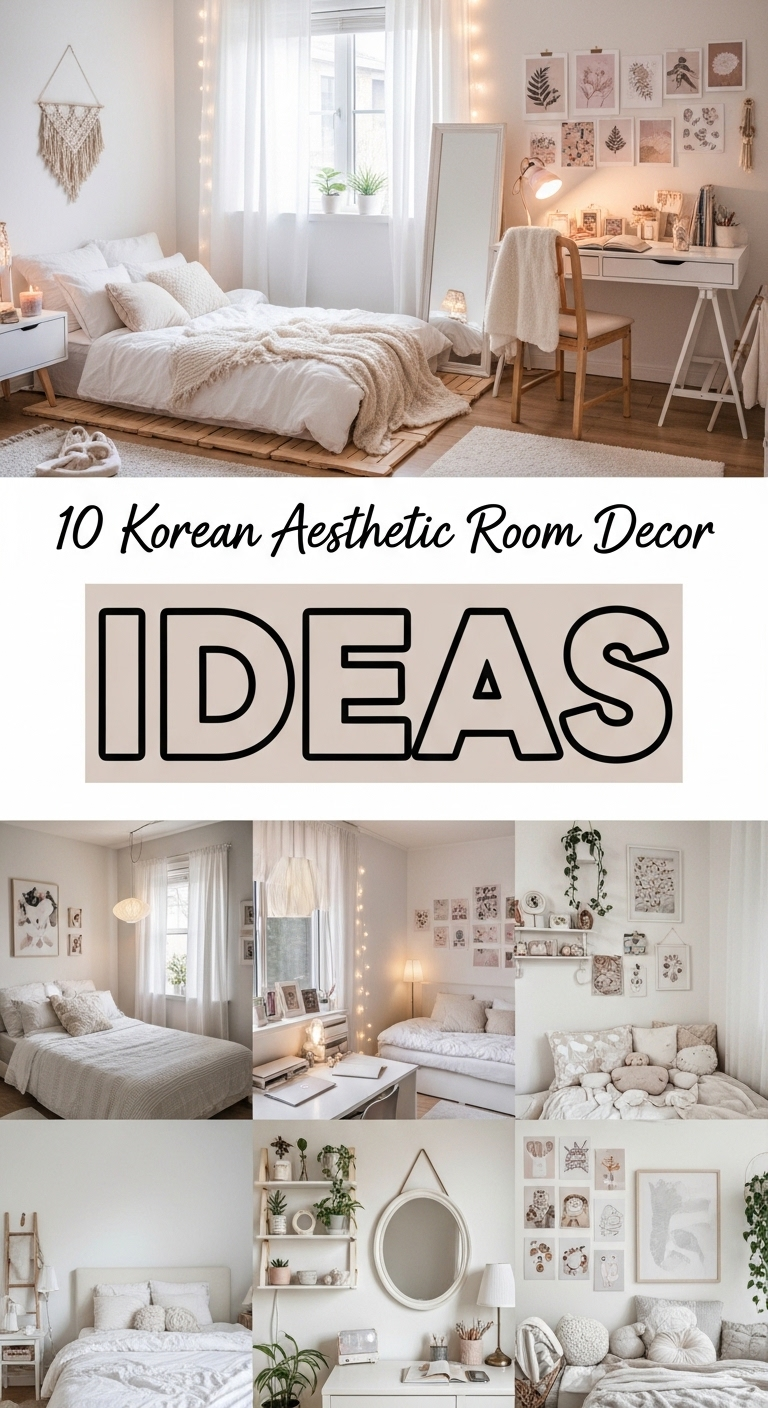
The Korean aesthetic—often referred to as “K-Interior”—is defined by a sense of soft minimalism, warmth, and intentionality. It’s about creating a space that feels like a sanctuary: light, airy, and deeply personal. Unlike stark modern minimalism, the Korean style embraces “clutter” as long as it is curated and “cute.”

In 2026, the trend has shifted slightly from pure white to “Butter & Bone” tones—warmer yellows and off-whites that make a room feel sun-drenched even on cloudy days.
1. The “Low-Profile” Floor Bed
A staple of Korean room design is keeping furniture close to the ground. Placing your mattress on a low wooden pallet or directly on a thick rug makes the ceilings feel higher and the room more spacious.
- The Vibe: Relaxed and cozy.
- Essential: Use a neutral-toned duvet (gingham or solid cream) with ruffled edges for that soft, lived-in look.

2. Wavy “Amorphous” Mirrors
Standard rectangular mirrors are out; irregular, wavy, or “blob” shaped mirrors are the focal point of a Korean-style vanity. These mirrors act as functional pieces of art.
- Placement: Prop a full-length wavy mirror against a wall surrounded by a small cluster of indoor plants.
- The Trend: Mirrors with creamy plastic or wooden frames are peak aesthetic right now.

3. The “Sunset” Ambient Lamp
Lighting is the most important element. Instead of harsh overhead lights, Korean rooms rely on multiple “warm” light sources. The sunset projection lamp creates a golden hour glow at any time of day.
- The Look: A soft orange or pink circle of light cast against a plain white wall.
- Why it Works: It adds instant depth and a dreamy, cinematic quality to your room.

4. Transparent Acrylic Furniture
To keep a small room from looking crowded, use transparent acrylic (ghost) chairs or side tables. They provide utility without taking up “visual space.”
- Styling Tip: Place a stack of aesthetic “coffee table books” or a single vase on an acrylic table so they appear to be floating.

5. Pleated Fabric “Mushroom” Lamps
Retro-inspired lamps with pleated fabric shades and small ceramic bases are everywhere in K-Interiors. They provide a soft, diffused light that is perfect for late-night reading or journaling.
- The Detail: Look for a lamp with a wooden or chrome base to match your room’s hardware.

6. The “Wall Collage” of Prints
Korean decor embraces the “beautifully lived-in” look. Use washi tape to create a curated collage of postcards, film photos, and fabric swatches on the wall above your desk.
- The Palette: Stick to a specific color story (e.g., all pastels or all sepia tones) to keep it from looking messy.
- Pro Tip: Mix in a few pressed dried flowers for a tactile, organic touch.

7. Gingham and Tulip Patterns
Small-scale patterns like gingham (checked) or minimalist tulip prints are the signature of a “Soft Girl” Korean aesthetic. Use these for your pillowcases, curtains, or even small table runners.
- Colors: Soft sage green, pale lemon, or dusty lilac.

8. Indoor “Air-Purifying” Greenery
Plants like the Snake Plant, Pothos, or a Pachira Money Tree bring life into a minimalist space. In Korean decor, the pot is just as important as the plant—choose matte ceramic or woven seagrass baskets.
- The Aesthetic: One large statement plant in a corner or several tiny succulents on a window sill.

9. Hanging Fabric Calendars
Instead of paper planners, many Korean-inspired rooms feature a minimalist fabric wall calendar. These are usually made of raw linen with simple black typography.
- The Benefit: It doubles as a soft wall hanging that dampens sound and adds texture to the room.

10. Glass Vases with Single Stems
Instead of massive bouquets, the Korean aesthetic favors minimalist floral arrangements. A single tulip, a stem of eucalyptus, or a dried pampas grass stalk in a uniquely shaped glass vase.
- The Look: Use tinted glass (amber or smoke grey) to add a subtle pop of color to a white desk or dresser.



Leave a Reply