Our porch was never just a place to sit, and I knew that the first summer we moved in, when supper kept stretching past the table and out onto the steps, with glasses sweating on the railing and everybody finding a reason to stay outside a little longer. I wanted seats that could hold that kind of evening, the kind where my folks settle in with iced tea, the kids pile on with bare feet and sticky hands, and a neighbor stops by and stays for an hour without anybody planning it. A swing felt right because it moves the way a porch conversation moves, slow and easy, back and forth, with room for one more person if somebody scoots over. I did not build these swings to show off a workshop, I built them so the people I love would have a comfortable place to gather and watch the street go quiet at dusk, and every choice that follows came from picturing who would sit there, and how long they would want to stay.
Before any of that gathering can happen, the part overhead has to be right, and I will not soften this, because a swing is only as safe as what holds it up. The ceiling joists, the pergola, or the frame you hang from must support the furniture plus multiple adults, not just one person sitting still, and you have to be honest about that combined weight before you drill a single hole. I use quality lumber, weather stains, sturdy chains, and secure hooks, and I check the hooks and the structure again after the swing is up, because a porch that looks strong can still hide a weak joist, a rusted fastener, or a beam that was never meant to carry a moving load. If the overhead support is not solid, do not hang the swing there, and do not talk yourself into it because the spot gets the best breeze, because the evenings I am building for depend on everybody getting up from that seat just as easily as they sat down.
1. Classic Wooden Slat Porch Swing
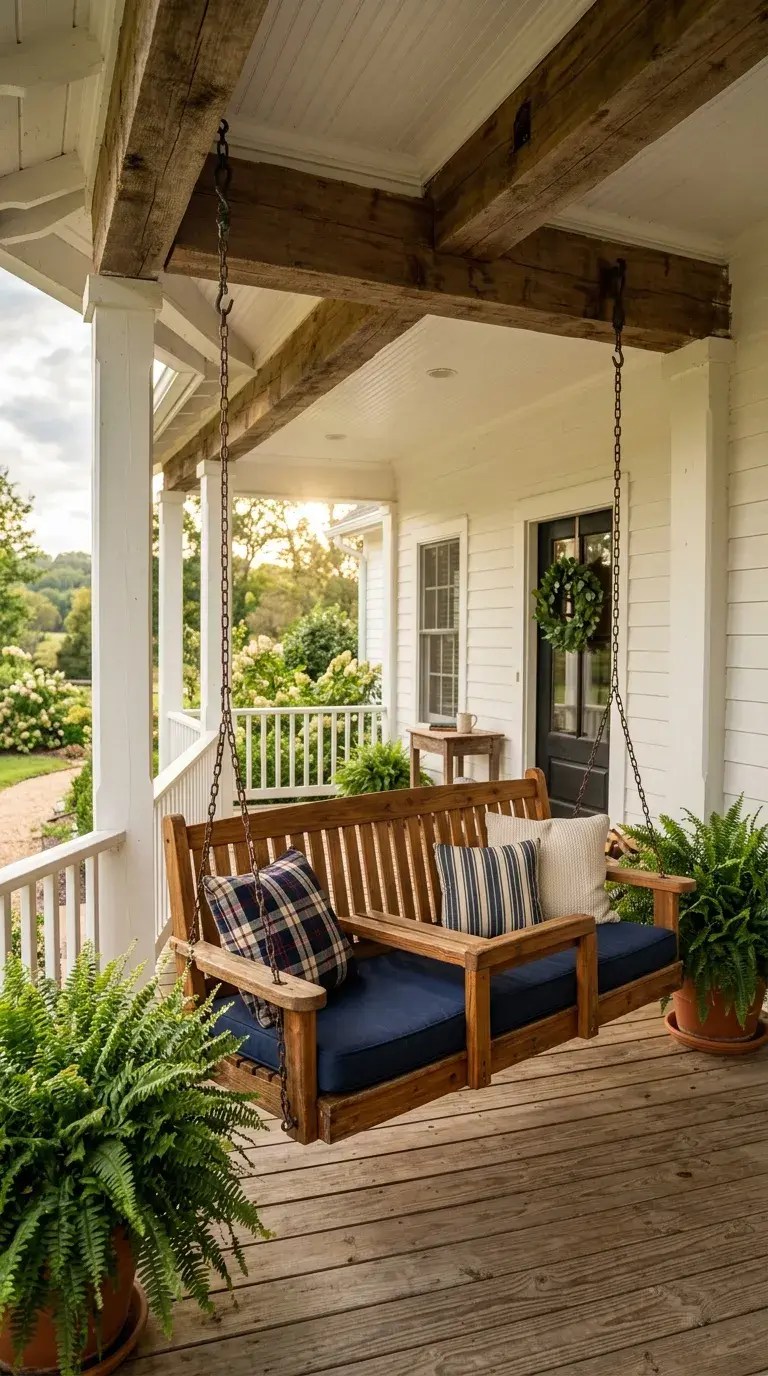
The first swing I built was the one my family reached for without thinking, the classic wooden slat kind that looks like it has always belonged on a porch, and I made it with a circular saw, a pocket-hole jig, sanding blocks, and glue, working through the slats one at a time until the seat felt even under my hand. I chose cedar for ours, though redwood and teak would have served the same purpose, because cedar, redwood, and teak resist moisture and insects, and I wanted a swing the kids could climb onto in damp sneakers without me worrying about what the weather had done to it overnight. The pocket screws stayed hidden inside the joints, so nobody felt a screw head against the back of a leg, and I sanded every slat until I could run my palm across it without catching a splinter, because a family swing gets bare arms, bare feet, and sleepy heads leaning back, and a rough edge ruins that faster than any wobble. I finished it with a UV sealant and a semi-transparent stain that let the grain show through while it guarded the wood from sun and rain, and I hung it on heavy galvanized chains with hooks rated for the maximum weight the swing would ever carry. The buffalo-check cushions and the lumbar pillows came last, and they turned a sturdy wooden seat into the spot where my folks linger after lunch, where the kids fight over the middle, and where I sit at the end of the day with the swing moving just enough to remind me why I built it.