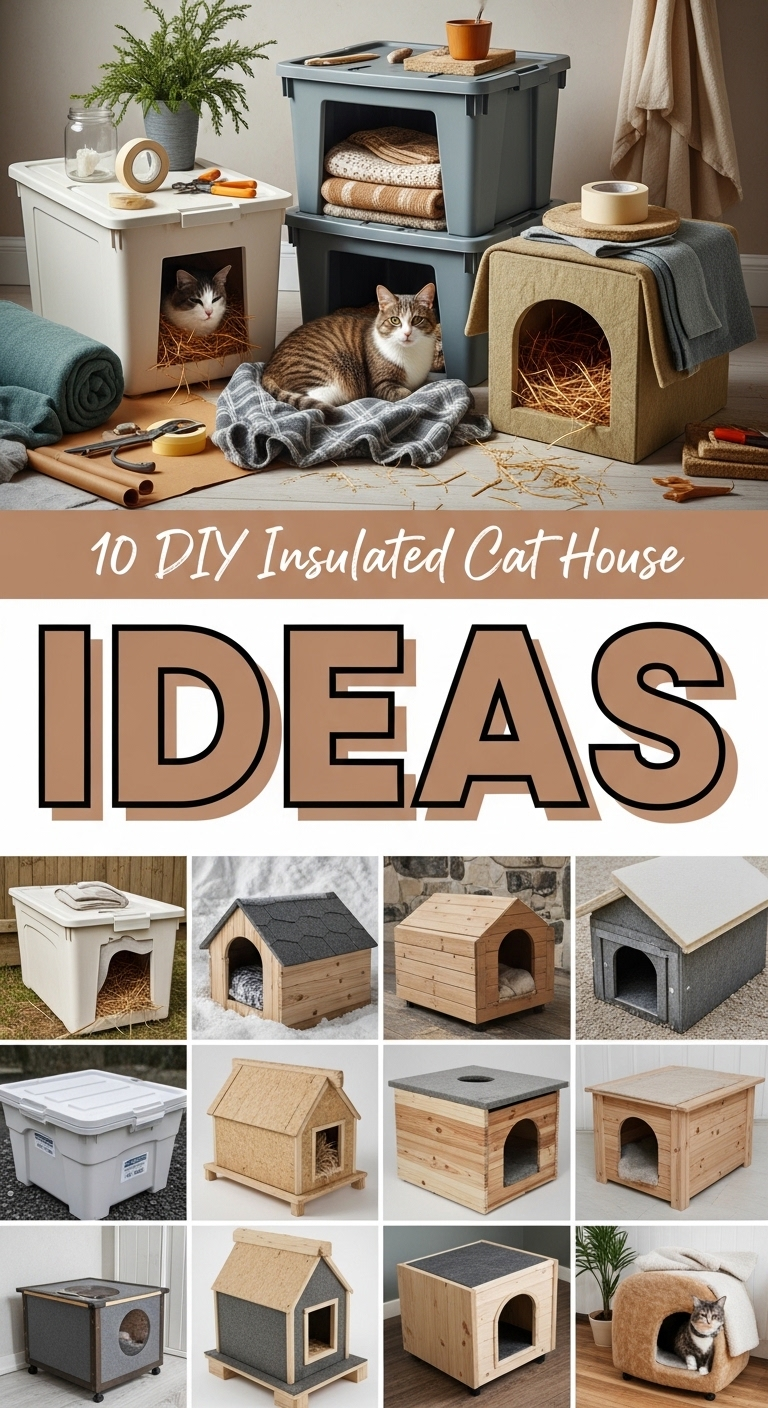
Creating a safe, warm sanctuary for community cats or your own outdoor explorers is a rewarding project that can literally be a lifesaver during the winter months. A high-quality DIY insulated cat house needs to focus on three things: moisture protection, windproofing, and heat retention.

Here are 10 DIY Insulated Cat House ideas designed to be functional, durable, and Pinterest-ready.
1. The “Bin-in-a-Bin” Ultimate Shelter
This is the gold standard for feral cat advocates because it is 100% waterproof and incredibly easy to clean.
- How to create it: Place a smaller plastic storage bin inside a larger one. Fill the 2-inch gap between the two bins with Styrofoam sheets or spray foam.
- The Entrance: Cut a 6-inch circular hole through both bins. Line the edges with duct tape to prevent jagged edges.
- Pro Tip: Use straw (not hay or blankets) for bedding. Straw repels moisture, while blankets can freeze if they get damp.

2. The Upcycled “Styrofoam Cooler” House
If you receive meal kits or medical shipments, those thick Styrofoam coolers are perfect pre-insulated bases.
- How to create it: Simply cut a hole in the side of the cooler. To protect the Styrofoam from being scratched or degraded by UV rays, slide the entire cooler into a tight-fitting cardboard box and wrap the exterior in heavy-duty contractor bags.
- The Look: It’s lightweight, highly effective, and virtually free to make.

3. The “Pallet Wood” Cabin
For those who want an aesthetic that matches their backyard deck, reclaimed pallet wood offers a rustic, “tiny house” vibe.
- How to create it: Build a basic wooden box frame. Line the interior walls with Reflectix (bubble foil insulation) before nailing the outer pallet slats into place.
- The Roof: Use a slanted design so rain and snow slide off easily.

4. The “Reflectix” Tent Shelter
If you have a covered porch and just need to add a heat-reflecting layer to an existing soft bed, this is the quickest solution.
- How to create it: Wrap a standard “cat cube” or soft bed in Reflectix foil. This material reflects 97% of the cat’s radiant body heat back onto them.
- The Vibe: High-tech and space-age, but incredibly effective for temperature regulation.

5. The “Double-Walled” Plywood Condo
If you are handy with a circular saw, a plywood house is the most durable long-term option for multiple cats.
- How to create it: Build a “box within a box” using 1/2-inch plywood. Sandwich 1-inch rigid foam insulation between the layers.
- The Detail: Elevate the house on 2×4 “legs” to keep the cold from seeping up through the ground.

6. The “Old Igloo” Cooler Conversion
Hard-sided camping coolers (like an old Igloo or Coleman) are essentially ready-made insulated houses.
- How to create it: Using a hole saw attachment on a drill, create an entrance on the narrow side of the cooler. Since coolers are already vacuum-insulated or foam-filled, they provide incredible thermal protection.
- The Aesthetic: It’s rugged, waterproof, and looks organized in a garage or shed.

7. The “A-Frame” Reflective Slate
A-frame structures are naturally wind-resistant and allow for better air circulation while trapping heat at the peak.
- How to create it: Lean two pieces of insulated siding or foam board against each other to form a triangle. Seal the back wall and leave a small flap at the front.
- Materials: Use Mylar emergency blankets to line the inside for a super-boost in heat retention.

8. The “Under-the-Deck” Stealth Box
For those who want to help community cats without altering the look of their yard, a “stealth” box is the way to go.
- How to create it: Create a low-profile insulated box painted to match your home’s foundation or deck lattice.
- The Function: This protects the cat from predators (like coyotes) while blending into the landscaping.

9. The “Repurposed Wine Crate” Mini-Pod
For small cats or kittens, a wooden wine crate provides a sturdy, stylish frame.
- How to create it: Line the interior of the crate with cork sheets (a natural insulator). Wrap the outside in a waterproof tarp or roofing felt.
- The Style: It has a “vintage boutique” feel that looks great on a balcony.

10. The “Solar-Heated” Solarium
If the cat house is in a sunny spot, you can use the greenhouse effect to your advantage.
- How to create it: Build an insulated box but use a thick sheet of clear Plexiglass for the roof or a large window.
- The Science: During the day, the sun heats the interior; at night, the insulated walls trap that heat.
- Safety: Ensure there is a shaded area inside so the cat doesn’t overheat on warmer days.

Essential Rules for Winter Cat Houses
- Escape Routes: If there are predators in your area, consider a back “emergency exit” that is slightly smaller than the front door.
- Straw, Not Hay: Hay can get moldy and holds moisture; straw is a hollow stalk that traps air and stays dry.
- Small Entrances: The hole should only be large enough for a cat (approx. 5.5 to 6 inches). A larger hole lets out too much heat.



Leave a Reply