I walked my backyard with a tape measure in one hand and a coffee in the other, and the yard told me the truth right away. A bench tucked against the fence, or a corner sofa built for two, turns a patch of grass or a narrow strip of concrete into an actual destination. I stopped looking at the square footage and started thinking about where I would put my coffee on a Saturday morning.
Store-bought patio furniture rarely fits small spaces well. Full-size sectionals swallow a balcony whole, and most ready-made benches are either flimsy or priced like a car payment. When I build it myself, I control the dimensions, the materials, and the budget, and I can shape a seat to wrap around a tree, hug a corner, or fold flat against the wall when it is not in use. Most of these projects use lumber, salvaged pallets, concrete blocks, or thrifted finds I can source on a weekend. Some take an afternoon. A couple take a full weekend for a stained, cushioned, furniture-grade finish. None require a garage full of tools, and all are designed for tight spaces: shallow footprints, vertical storage, and pieces that do double duty as planters, storage, or footrests.
I paced each idea in place before I trusted it. I measured the walkway. I sat down. I stood up again. Pick one that matches your skills and your space, then make it yours. The best small-yard seating is the kind you actually built, scuffed a little, and use every single day.
Quick Answer: The best DIY outdoor seating for small backyards uses a shallow footprint and doubles as storage or greenery. Top options include a pallet sectional, a cinder block and timber bench, rope-wrapped tire ottomans, log stump stools, an L-shaped corner bench with under-seat storage, a rope hanging chair, an upcycled headboard bench, a fold-down wall bench, stacked crate seating, and a bench with a built-in planter backrest. Most can be built in a weekend with basic tools and exterior-grade materials.
1. Pallet Wood Sectional Sofa
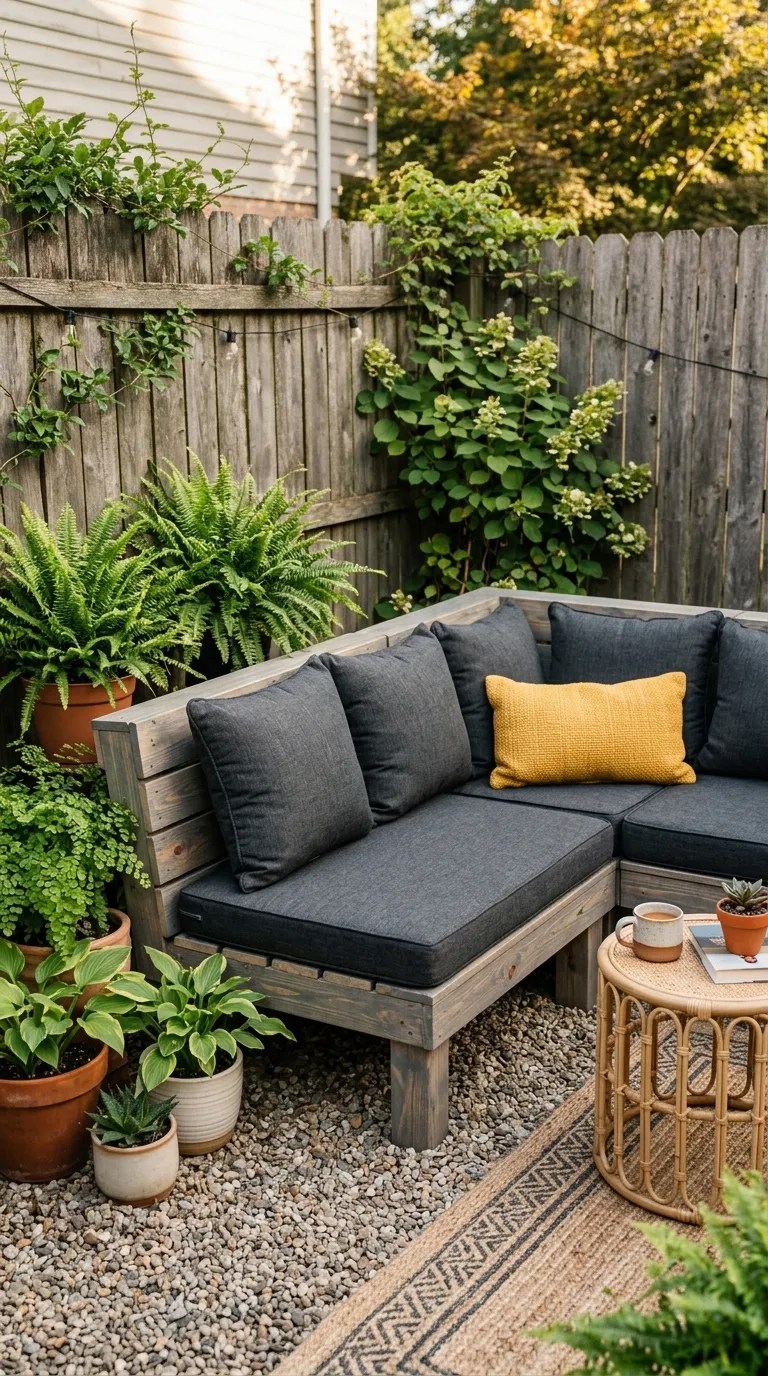
I started at the long fence, tape stretched out, and marked sixty inches. Twenty-four inches deep left room to pass without turning sideways, and that measurement settled it. A well-sanded pallet sofa is genuinely comfortable and costs a fraction of a store-bought set, but only if I treat it like real furniture: sand it properly, seal it, and invest in decent cushions.
Materials: two or three heat-treated pallets (look for the “HT” stamp, and avoid any marked “MB,” which indicates chemical fumigation), a circular saw or handsaw, an orbital sander with 80- and 120-grit pads, exterior wood stain or deck sealer, 2½-inch exterior screws, and outdoor foam cushions with weather-resistant covers.
How to build it: Break the pallets down into usable slats and stringers, then cut the base sections to your dimensions. A footprint of roughly 60 by 24 inches per seat section works well in a small yard — it is deep enough to lounge on but shallow enough to leave a walkway. Sand every surface until it is smooth to the touch, paying extra attention to edges where slivers hide. Stain or seal all six sides of each board, then screw the base and backrest together. Add short legs or rubber feet to lift the frame off damp ground.
Time and difficulty: a full weekend, moderate. The sanding is the slow part.
Build a corner section so the sofa wraps an L-shape around the patio edge, or leave the space under the seat open and slide two weatherproof storage bins underneath for cushions and garden tools. I sand with the grain and finish with a coat of exterior deck sealer rather than paint. It keeps the wood grain visible and holds up better to sun and rain.