10. Bench with a Built-In Planter Backrest
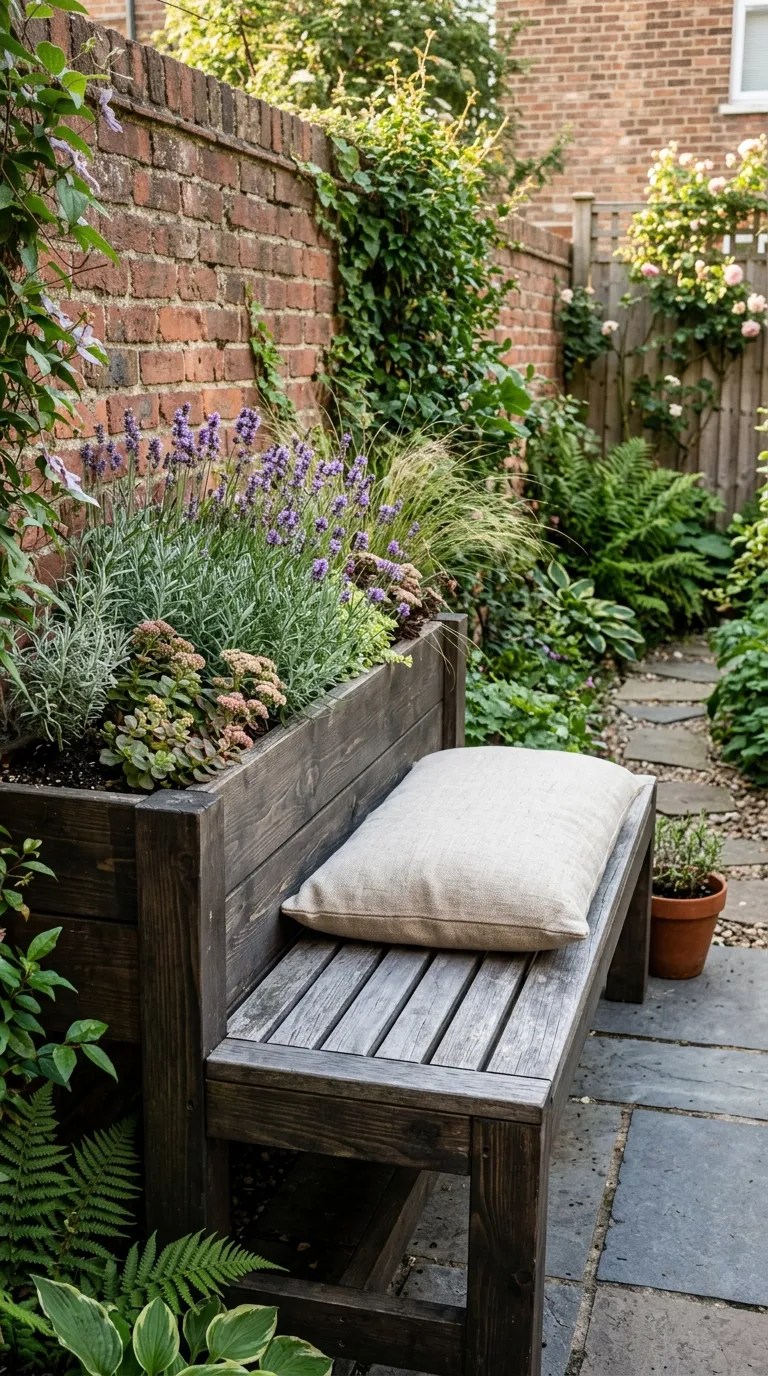
The narrowest strip of my yard got the last measurement. A normal bench plus a flower bed would not both fit, so I measured for one piece that does both jobs. The backrest is the planter. I sit with greenery right behind my shoulders, and the whole piece occupies roughly the same footprint as a standard bench.
Materials: 2×6 and 2×4 pressure-treated lumber, exterior screws, a planter liner or pond liner, landscape fabric, gravel for drainage, potting soil, exterior stain, and drought-tolerant plants like sedum, lavender, or ornamental grasses.
How to build it: Build a bench frame with a slatted seat, then extend the back uprights higher than usual and frame a box between them to form the planter. Line the box with a waterproof liner and drill drainage holes through the bottom. Add a layer of gravel, then landscape fabric, then soil. Plant it up, water thoroughly, and let it settle for a few days before heavy use.
Time and difficulty: a weekend, moderate.
Keep the planter shallow — six to eight inches is plenty for most succulents and herbs — so it does not become dangerously heavy or hard to water. Herbs like rosemary and thyme work well here and smell wonderful when I brush against them. Avoid plants with thorns or aggressive trailing vines that will invade the seating area.
Frequently Asked Questions
How do I make DIY outdoor seating weatherproof?
Use exterior-grade materials from the start: pressure-treated lumber, cedar, teak, or sealed hardwood. Seal every surface, including the underside and end grain, with an exterior stain or oil. Choose stainless steel or coated exterior screws so they do not rust, and elevate wood off the ground with rubber feet or blocks so it is not sitting in moisture. Bring cushions inside or store them in a weatherproof bin when rain is forecast.
What is the cheapest DIY outdoor seating option?
Log stumps and cinder block benches are the least expensive, since blocks and salvaged lumber are inexpensive and require no cutting. Pallet furniture is a close third if you can source free pallets, though you will spend more on sanding supplies and cushions than on the wood itself.
Can I build outdoor seating without power tools?
Yes. A handsaw, a screwdriver or hand drill, and sandpaper will get you through a cinder block bench, crate seating, or a simple stump stool. Power tools mainly save time on sanding and cutting — they are not strictly necessary for most of these projects.
What type of wood holds up best outdoors?
Teak, cedar, and black locust are naturally rot-resistant and weather to a soft gray. Pressure-treated pine is the budget choice and takes stain well, though it needs resealing every year or two. Avoid untreated pine, particleboard, and medium-density fiberboard, which swell and crumble quickly outdoors.
How do I stop outdoor cushions from getting moldy?
Choose cushions with removable covers made from solution-dyed acrylic or olefin fabric, which resist mildew. Store them in a lidded bin or bring them inside overnight during humid stretches. If they do get damp, stand them on edge in the sun rather than stacking them flat, and wash covers according to the manufacturer’s instructions.
How much space do I really need for a small backyard seating area?
A bench 15 to 18 inches deep needs roughly two feet of clearance in front for comfortable sitting. A two-person seating nook with a small side table fits comfortably in about five by five feet. If you are tighter than that, go vertical with a fold-down bench or hanging chair.
Final Thoughts
Small backyards reward cleverness more than square footage. A corner bench that stores cushions, a fold-down seat that vanishes against the wall, a planter backrest that doubles as a herb garden — these are the moves that make a compact space feel generous.
Start with one project. If you have never built anything, try the cinder block bench or the crate seating, then live with it for a season and see how you actually use the space. If you have a free weekend and a circular saw, the pallet sectional or the L-shaped corner bench will change how your yard feels entirely.
And do not be afraid to adapt. Change the dimensions to fit your odd corner. Paint it a color that makes you smile. Add a cushion you found at a flea market. The projects here are starting points, not instructions to follow to the letter — the version you build for your own little patch of outdoors will always be the one that fits best.