10. Rustic Wood and Metallic Accents
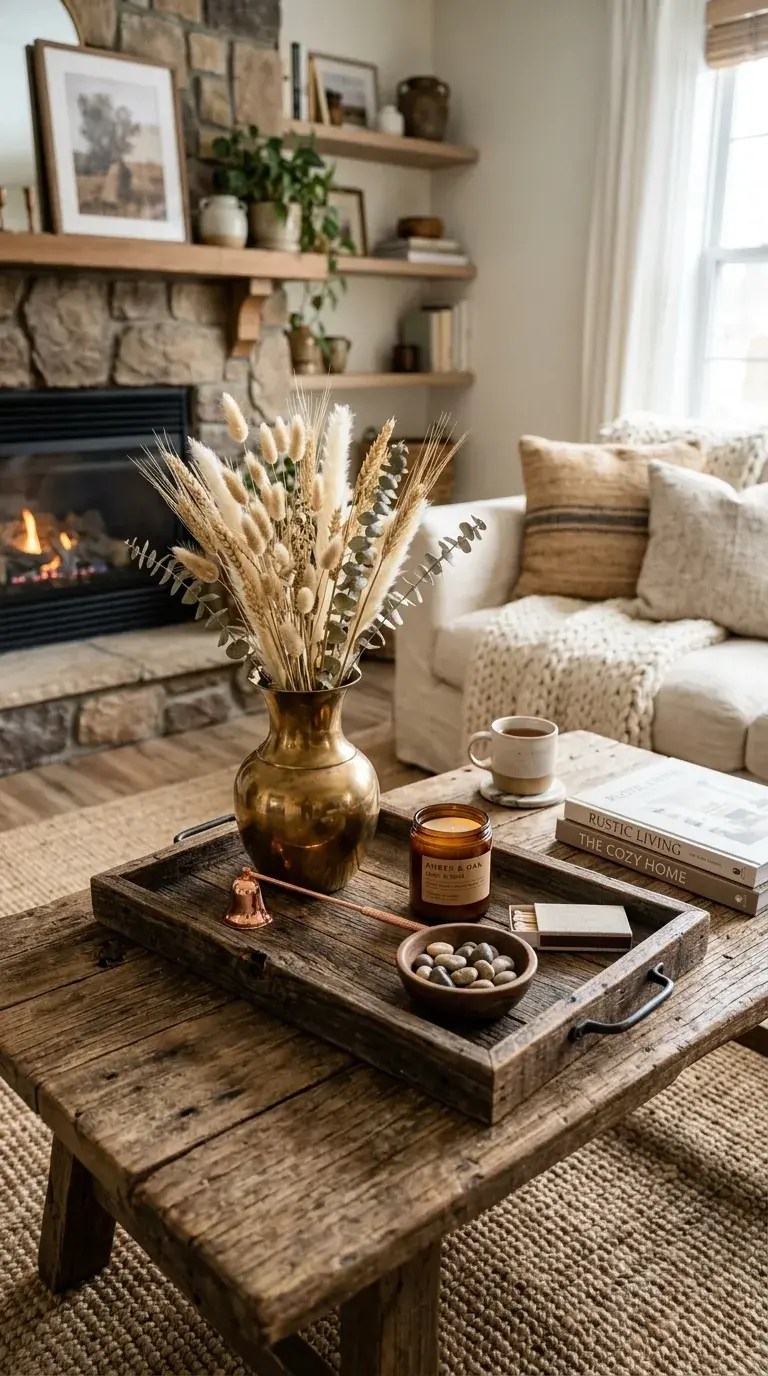
Warmth lives in wood and metal before it lives in any other material here. A dough bowl on a table feels warm to the touch, a reclaimed side table carries marks that catch the light unevenly, and raw-edge coasters give a mug a resting place that looks cut from a larger piece of timber. I bring in rustic wood in those useful forms, and I let the grain stay visible, because sanded-smooth and varnished wood loses the very quality that makes it feel right in winter.
I pair the wood with warm metals in brass, copper, and bronze, which catch and multiply whatever light is in the room. A brass tray holds candles or a small arrangement and throws a soft gleam back, a copper watering can stands ready for the houseplants and doubles as a sculptural piece, and bronze candle holders add weight and a low shine to a mantel or a table. The wood grounds the metals, and the metals keep the wood from looking dull, and together they give a surface both texture and glow.
The overdoing I have to resist is polishing every metal piece until it shines like new, or filling every surface with wood until the room feels like a workshop. I leave the brass with a little age on it, I keep one metal accent per surface, and I let a single dough bowl or a single tray carry a grouping. When light moves across brass and copper while a hand rests on rough wood beside it, the room holds warmth in two ways at once.
Conclusion
Winter rooms do not need a single grand gesture. They need small, sense-led changes that add up, a blanket that feels heavy in the hand, a lamp that glows low, a branch that smells green, a wall that softens sound, and wood and metal that hold warmth. I add one change, I live with it for a day, and I notice whether my hand, my eye, or my nose keeps returning to it. The changes that get returned to are the ones that stay.
I keep the pieces I can swap, fold, move, and reuse, and I let the room stay flexible rather than finished. A pillow cover can change, a garland can come down, a simmer pot can be emptied, and the room can breathe again. That flexibility is what makes a cozy home feel personal, because the room keeps answering to the people who live in it, season after season, without needing to be rebuilt from scratch.