9. Textural Wall Hangings and Art
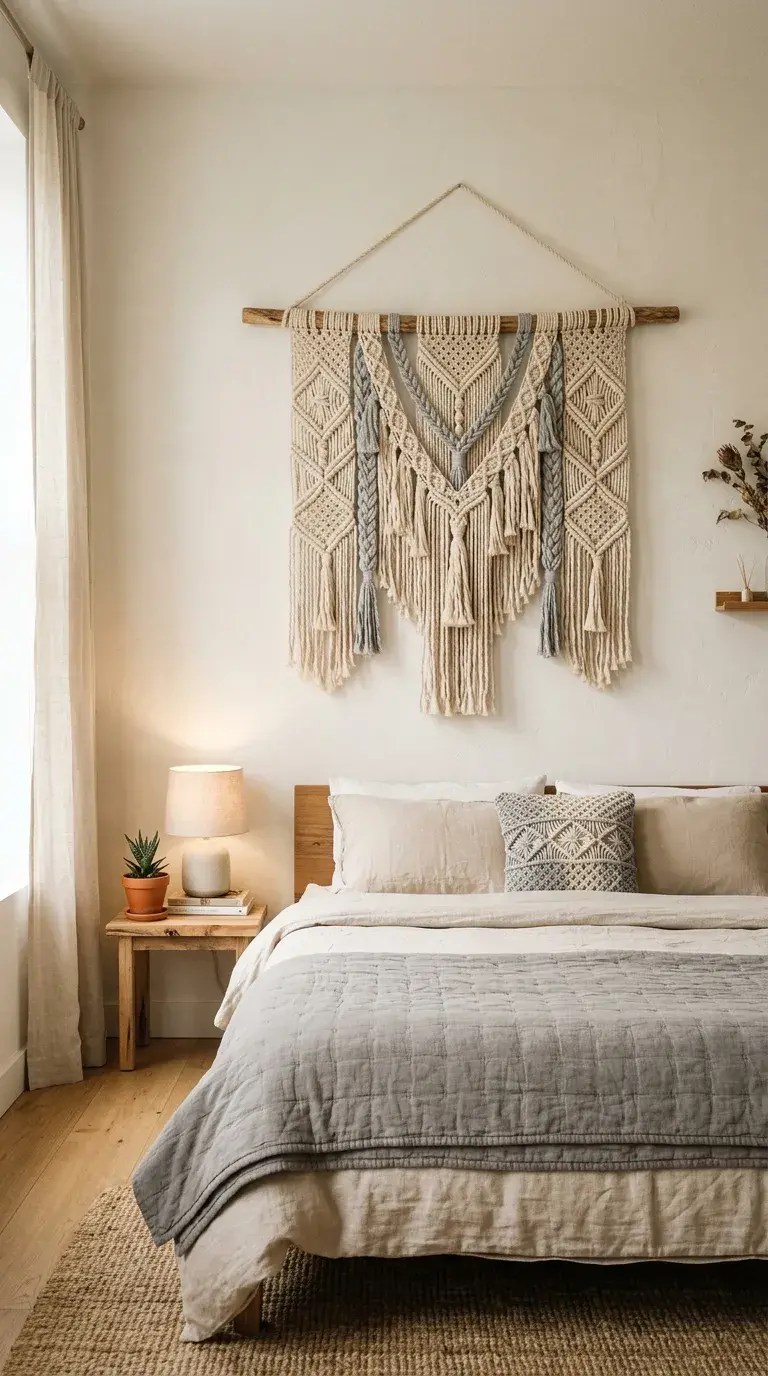
Sound softens first when a textile goes up on a wall. A bare wall bounces voices back, while a woven hanging, a piece of macrame, or a textile tapestry absorbs a little of that bounce, and the room sounds calmer as well as looking warmer. I hang woven wall hangings and macrame where a wall has felt hard and empty, and I let the knots and the different yarn weights show, because that handmade unevenness is what makes the piece feel made rather than manufactured.
I swap framed art for the season too, trading light, airy pieces for deeper tones, moody landscapes, and warm palettes that suit low winter light. Where I want texture more than image, I frame a piece of textured fabric instead, an antique quilt fragment or a length of tweed, and I let the weave become the picture. The fabric frame and the hanging work together, one flat and contained, one loose and dimensional, and the wall gains depth without gaining clutter.
The placement error I repeat is hanging a textile too high, where it floats above the furniture and loses its connection to the room. I hang it so its lower edge relates to the sofa or the sideboard below, I step back and check that it reads as part of the seating area, and I leave a plain stretch of wall beside it. When voices sound a touch softer and the wall no longer feels like a blank slab, the hanging has earned its place.