4. Textured Stone or Tile Surround
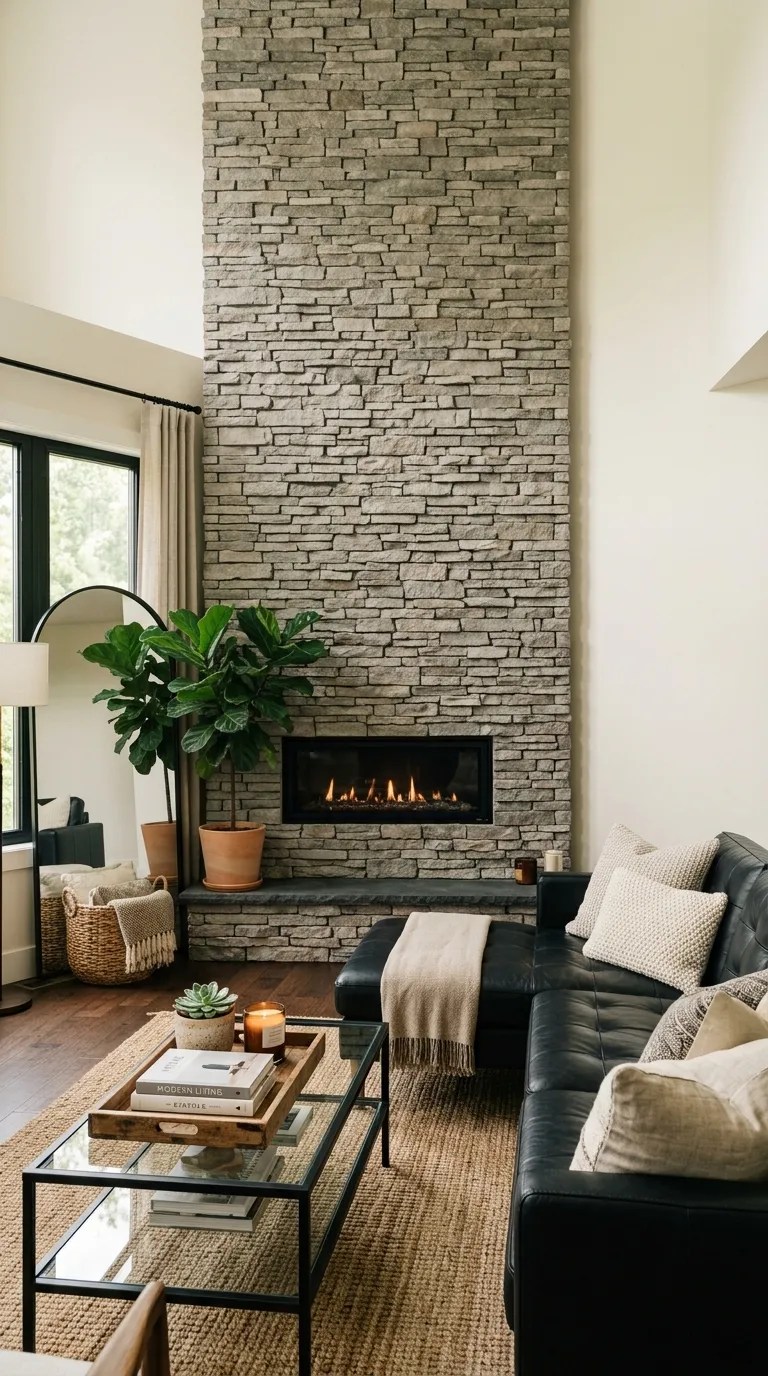
A plain surround makes the whole wall read flat, and changing the material changes the wall, not just the shelf. Natural stone — slate and stacked ledger panels — brings organic warmth; glossy subway tiles and geometric patterns read more contemporary; extending the material up to the ceiling makes a bold feature wall. The cost side is the tallest in this set: time, levelling, and grouting over a tall wall, with no easy undo once real stone or ceramic tile is fixed. That is why the decision deserves a trial before a commitment.
Worth it if the room needs a single strong feature and the budget and schedule allow a full renovation; hire help if the work is real stone or ceramic tile, because levelling and grouting are not the place to learn on the job. The lower-cost trial is peel-and-stick tiles, a temporary but noticeable update, in a matte finish for a muted, sophisticated look rather than gloss, paired with a simple wooden mantel and, in places, an unframed surround for a sleeker, industrial feel. The trade-off is durability against reversibility, and the trial answers whether the bolder material suits the room before the permanent version is bought.
Materials: Stone veneer panels, peel-and-stick tiles, or ceramic tiles, adhesive, grout (if applicable), level.
Time: Weekend project (longer for tile work).
Difficulty: Advanced (best for DIYers with tiling experience or hired professionals).