9. Murphy Desk with Hidden Shelving
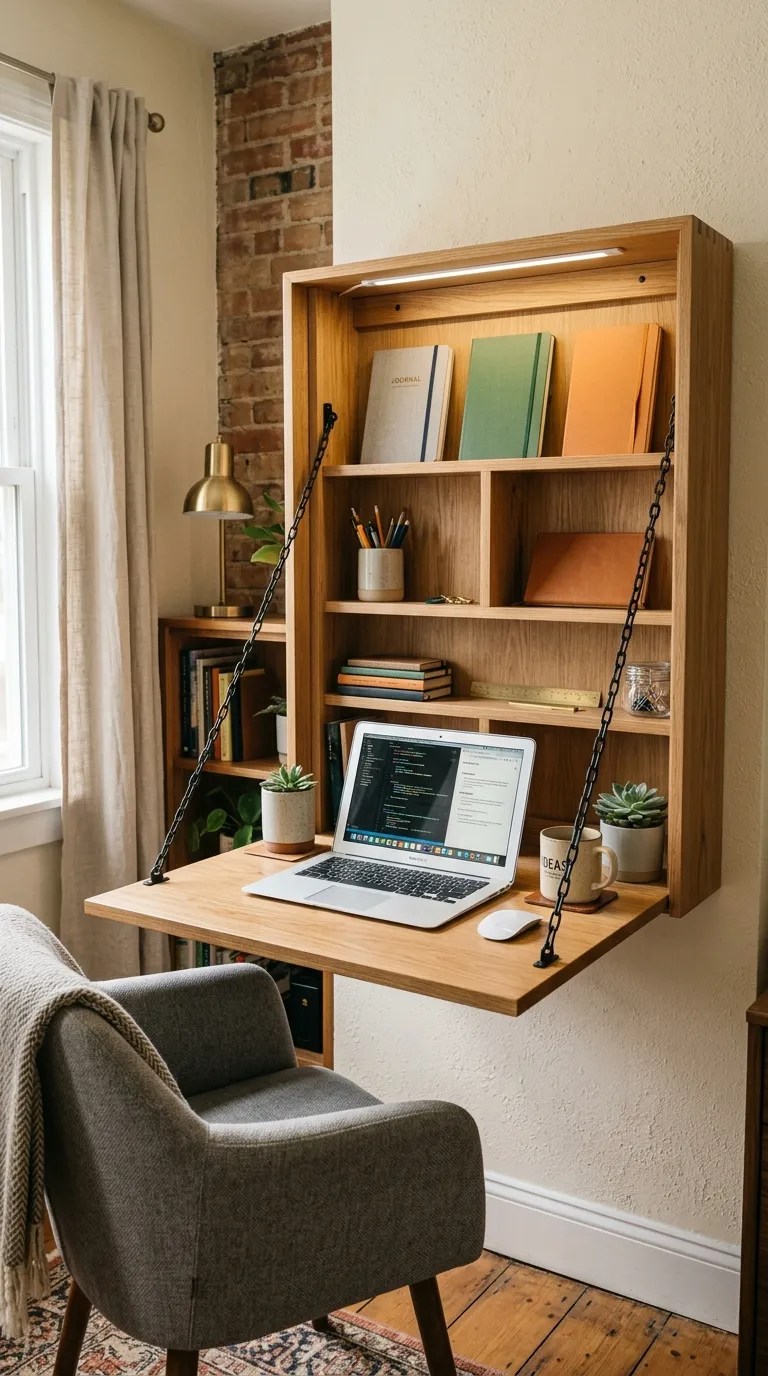
The wall where I needed a desk had no room for a desk, and that contradiction sat there for months while I worked at the kitchen table and cleared my papers away every evening. I measured the wall again, this time for what it could hold when it was folded shut, not just for what it could hold when it was open. A shallow wooden cabinet box, fixed to the wall with interior shelves inside, gave me a place for laptop accessories, notebooks, and pens that did not need a drawer, and a wooden door panel, hinged at the bottom of the frame, gave me a desktop that folded down when I needed it and folded away when I did not. The cabinet stayed shallow on purpose, so it did not jut into the room and steal the walkway when the desk was closed.
Heavy-duty piano hinges at the bottom frame carried the door panel, and folding support brackets or side chains held it horizontal once it was down, and I tested both the hinges and the supports with steady pressure before I put a laptop anywhere near them. The whole unit went into wall studs, because a desk that pulls away from the wall is not a desk at all, and I checked the stud positions twice before I drilled. Closed, the panel shut with a magnetic latch or a decorative hook, and the floor underneath stayed free for a chair to be pushed in or pulled out entirely. Open, it was a real workspace, with everything I needed already on the shelves inside, and when work ended I folded it shut and the room was a living room again.