10. Resin Ring Dishes and Small Decorative Bowls
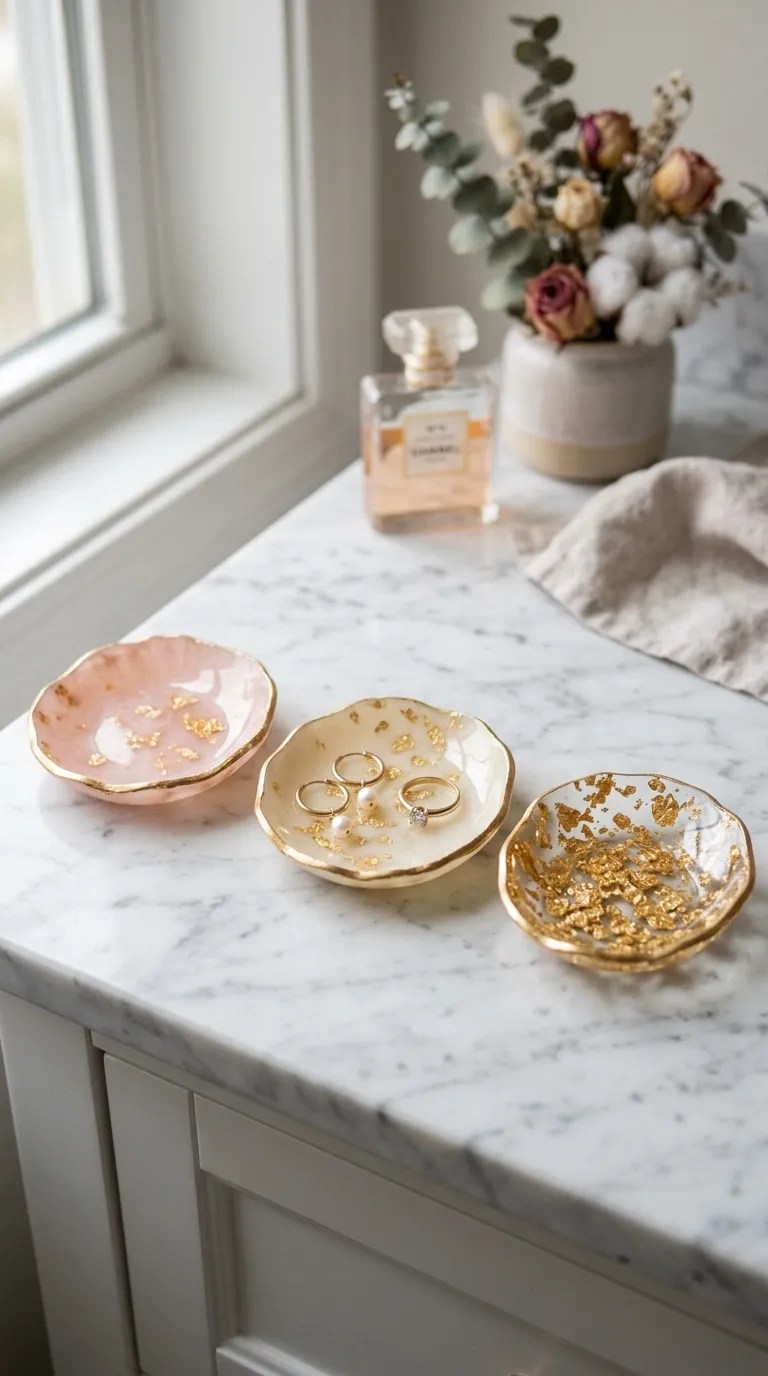
The last pour is the smallest, measured with the same care as the largest. I tint the resin a soft, complementary color, pour it to the depth I want, and while the surface is fresh, I set gold leaf on top or swirl a contrasting color in just after pouring. The cure is 12 to 24 hours.
Materials: small dish molds, two-part resin, pigments or alcohol inks, gold leaf or foil flakes, mixing supplies, and a heat gun.
Steps: Tint your resin with a soft, complementary color and pour it into the mold, filling it to the desired depth. For a decorative touch, gently place small pieces of gold leaf on the surface before curing, or swirl a contrasting color into the resin just after pouring. Once cured, demold and admire your tiny functional art piece.
Time and difficulty: Active time is about 10 minutes, with 12 to 24 hours of curing. This is a wonderful starter project because the small size means less resin, less working time, and a faster cure.
Customization ideas: Create a set of three nested ring dishes in graduated sizes and complementary colors for a lovely gift presentation. You can also add a monogram by placing a small vinyl letter on the bottom of the mold before pouring.
Helpful tip: Always measure your resin by volume or weight according to the manufacturer’s instructions. Incorrect ratios are the most common reason resin projects turn out sticky or soft.
I demold only after the full cure, and I check the ratio note before the next batch.
Working with resin is one of those crafts that grows with you. The first coaster you pour might not look exactly like the pictures online, and that’s completely fine. Every project teaches you something about color, timing, and how the resin wants to move. Before long, you’ll find yourself browsing thrift stores with fresh eyes, picturing which furniture piece deserves a custom set of resin knobs.
The most rewarding part of resin art isn’t really the finished object, although pulling a glossy, glassy piece out of a mold never gets old. It’s the quiet satisfaction of making something beautiful with your own hands. Pick one idea from this list, gather a few basic supplies, and give yourself permission to play. Your first piece won’t be your last, but it will be the beginning of a craft you can enjoy for years to come.
Frequently Asked Questions
What supplies do I need to start resin art as a beginner?
At a minimum, you’ll need two-part epoxy resin, mixing cups, wooden stir sticks, nitrile gloves, a respirator or good ventilation, pigments or alcohol inks, and a silicone mold. A heat gun or small kitchen torch also helps remove surface bubbles.
Is resin art safe for beginners?
Resin is safe to work with when you follow the manufacturer’s safety guidelines. Always work in a well-ventilated space, wear nitrile gloves, and consider a respirator rated for organic vapors. Avoid breathing in fumes, and never work near food preparation areas.
How long does resin take to cure?
Most two-part epoxy resins take about 24 hours to be demold-ready and 72 hours to fully harden. Some fast-cure resins can be demolded in 6 to 12 hours. Always check the product instructions, as cure times vary by brand and pour thickness.
Why is my resin sticky or soft after curing?
Sticky or soft resin usually means the two parts were not measured accurately or not stirred thoroughly enough. Always use the exact ratio specified by the manufacturer and stir for the full recommended time, scraping the sides and bottom of the cup. Cold environments can also slow curing and leave resin tacky.
Can I use food-safe resin for coasters and trays?
Yes, some resins are formulated to be food-safe once fully cured. These suit coasters, trays, and small dishes that may contact food. Look for products clearly labeled food-safe after curing, and follow the curing time recommendations before use.
How do I prevent bubbles in my resin projects?
Mix slowly and stir for the full recommended time to minimize air. After pouring, pass a heat gun or torch quickly over the surface to pop bubbles. Warming the resin slightly before mixing and pre-warming molds in a warm water bath can also help.
How should I store leftover resin?
Liquid resin components should be stored in a cool, dry place with lids tightly sealed. Most resins have a shelf life of about one year when stored properly. Once mixed, however, resin will cure, so only mix what you plan to use within the working time on the package.