10. Flat-Pack Glow-Up with New Legs and Trim
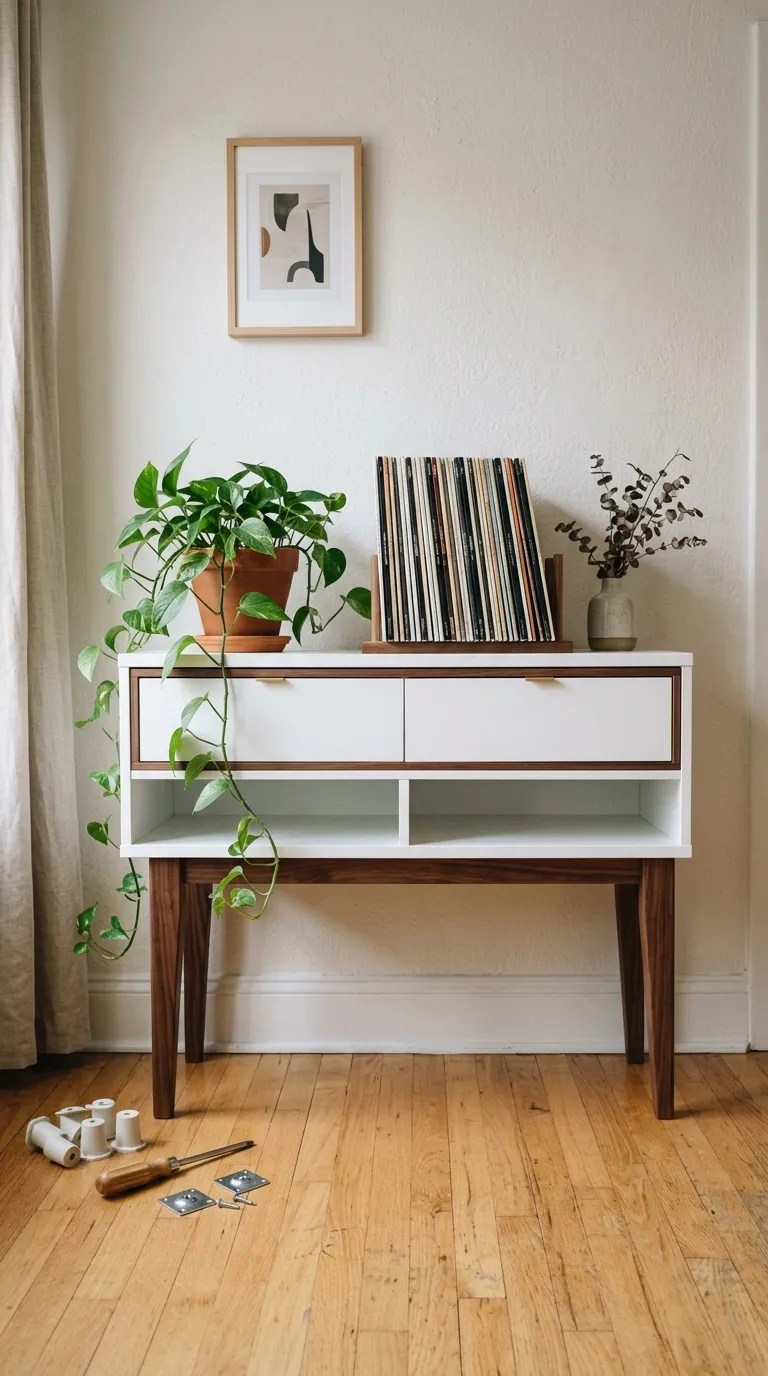
Basic flat-pack furniture often looks basic because of its proportions and hardware, not its material. Swapping out the standard short legs for taller mid-century tapered ones, or adding a strip of decorative trim to a plain drawer front, changes a piece’s silhouette entirely.
Measure the diameter of the existing leg fittings or the base of the piece before ordering. Most replacement legs come with mounting plates you screw into the underside, which takes about ten minutes with a drill. Tapered wood legs in oak or walnut instantly make a plain media console look intentional. Adding a thin strip of half-round molding along the top edge of a drawer front, painted in the same color as the cabinet, gives a subtle paneled effect.
Time: one to two hours. Difficulty: beginner. Budget alternative: wood legs from a hardware store, unfinished, cost a fraction of branded ones and can be stained to match your existing furniture in an afternoon.
How much does a DIY furniture makeover usually cost?
Most of the projects here land between $20 and $60 in materials, assuming you already own a brush, a screwdriver, and a staple gun. The biggest variable is paint. A quart of quality furniture paint covers a dresser, and the leftovers often handle a second small piece.
What’s the best paint for furniture that gets heavy use?
For dining tables, kitchen cabinets, and anything that gets wiped down regularly, choose a water-based alkyd or a cabinet-grade enamel in satin or semi-gloss. They cure harder than standard wall paint and resist sticking and scuffing far better.
Do I need to sand before painting furniture?
Full stripping is rarely necessary, but light scuffing almost always is. A quick pass with a fine-grit sanding sponge gives the paint something to grip. If you use a bonding primer or chalk-style paint, sanding can be minimal — just enough to dull the shine.
How long should I wait before using painted furniture?
Paint feels dry long before it’s actually cured. Give drawers and doors 24 to 48 hours before closing them, and wait about a week before placing heavy items on a painted surface or wiping it with a damp cloth. Humidity and cool temperatures both slow curing.
Can I make over laminate or particleboard furniture?
Yes, but choose the right method. Vinyl wrap and contact paper are the most reliable options because they don’t depend on adhesion to a slick surface. If you want to paint, use a bonding primer formulated for glossy or non-porous materials, and accept that the finish may chip at high-contact edges over time.
What’s the cheapest way to update old dining chairs?
Reupholstering drop-seat cushions is the most affordable route, especially if you use a canvas drop cloth or a clearance fabric remnant. If the seats aren’t removable, a fitted cushion cover or a simple painted frame with new fabric can still shift the look for very little money.
How do I stop paint from peeling or chipping?
Almost all peeling traces back to prep. Oils, silicone residue from furniture polish, and dust all prevent paint from bonding. Clean with a degreaser, scuff the surface, use a primer suited to the material, and apply thin coats rather than thick ones.
Not every piece of furniture needs to be replaced, and not every makeover needs to be complicated. Pick the project that matches the tools you already own and the time you actually have — a set of drawers that needs nothing more than fresh paint and new pulls is a perfectly good place to start. Work slowly, don’t skip the cleaning step, and let yourself enjoy the messy middle where the piece looks worse before it looks better.
The real reward isn’t just the finished dresser or the refreshed kitchen. It’s the moment a guest asks where you bought something, and you get to say you made it over yourself. So go dig that forgotten side table out of the garage, choose a color you’ve been nervous about, and give it a second life. Your home will feel more like yours for it.