2. Peel-and-Stick Vinyl Wrap for Laminate Furniture
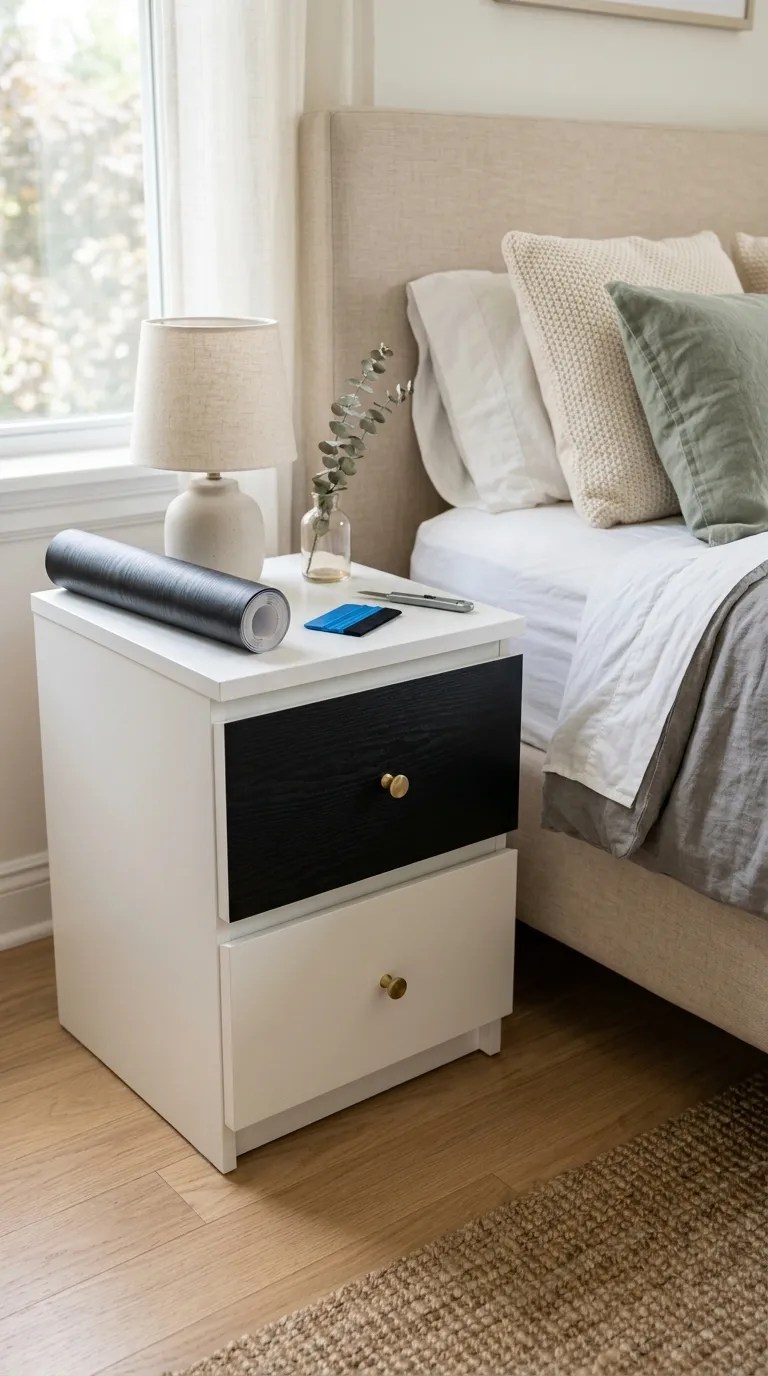
The nightstand arrived with a bubbled laminate top and a fake-wood finish I could not stand to look at. I had no wish to sand, prime, and wait through fumes, so I carried it to the kitchen table and reached for peel-and-stick vinyl. This method needs no sanding, primer, drying, or fumes, which is why I use it when I want a piece back the same day. I measured the top with 2 inches of overhang on each side, because vinyl cut exact pulls short at the edge. I cleaned the surface until it was dry and dust-free, peeled back only a few inches at a time, and pressed outward from the center with a felt squeegee.
Rushing trapped a long bubble across the top, so I lifted that section and re-laid it slowly, working in sections from then on. For drawer fronts I wrapped the vinyl around and folded the excess behind, and I used a hair dryer on low heat to settle it around rounded corners. A nightstand took 1 to 2 hours and a bookcase took an afternoon, both beginner work once I stopped hurrying. Wood grain looks calm, matte black looks sharp, terrazzo looks playful, and marble suits a small stool. Dollar-store contact paper is thinner and less forgiving, so I save it for small surfaces only. If a bubble appears, I lift and re-lay the vinyl and do not poke holes. The nightstand taught me a slow hand beats a fast one.