5. Gel Stain Over Worn Wood
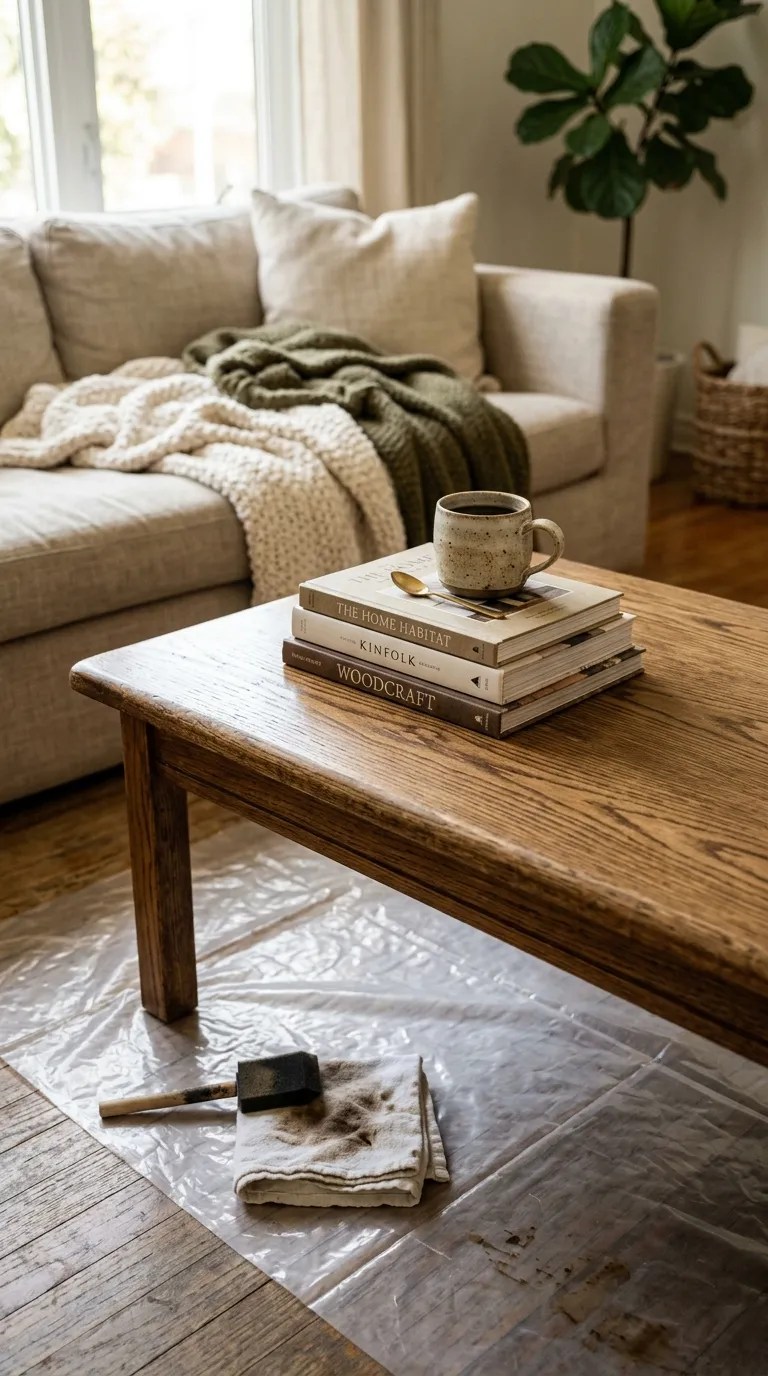
The side table I hauled home had a scratched, dull top with one pale ring where a plant pot had sat too long. The veneer felt too thin to sand hard, so I tried gel stain. Gel stain sits on the surface rather than soaking deep, which makes it forgiving on blotchy color and uneven grain. I scuffed the top with a fine pad, wiped the dust away completely, and brushed the stain on with a foam brush, working with the grain in small sections.
I left the first section sitting too long while I answered the phone, and it dried darker and patchier than its neighbor. After that I kept the timing tight: let the stain sit for a few minutes, wipe the excess with a lint-free cloth, and move to the next small section before the edge dried. I let the stain cure fully, then sealed it with wipe-on poly in satin in 2 to 3 thin coats. The job took an afternoon plus curing time and is beginner to intermediate work, since the wiping window matters. Gel stain suits solid wood and firmly attached veneer best, and I skip pieces with heavily peeling veneer, since stain will not glue a lifting edge down. The table taught me to work small and keep my phone in another room.